Download
3D Flyover
Add to list
More
6.2 km
~1 hrs 44 min
298 m
Out and Back
“A short, punchy climb from forest hush to heathery skies, with views that feel bigger than expected.”
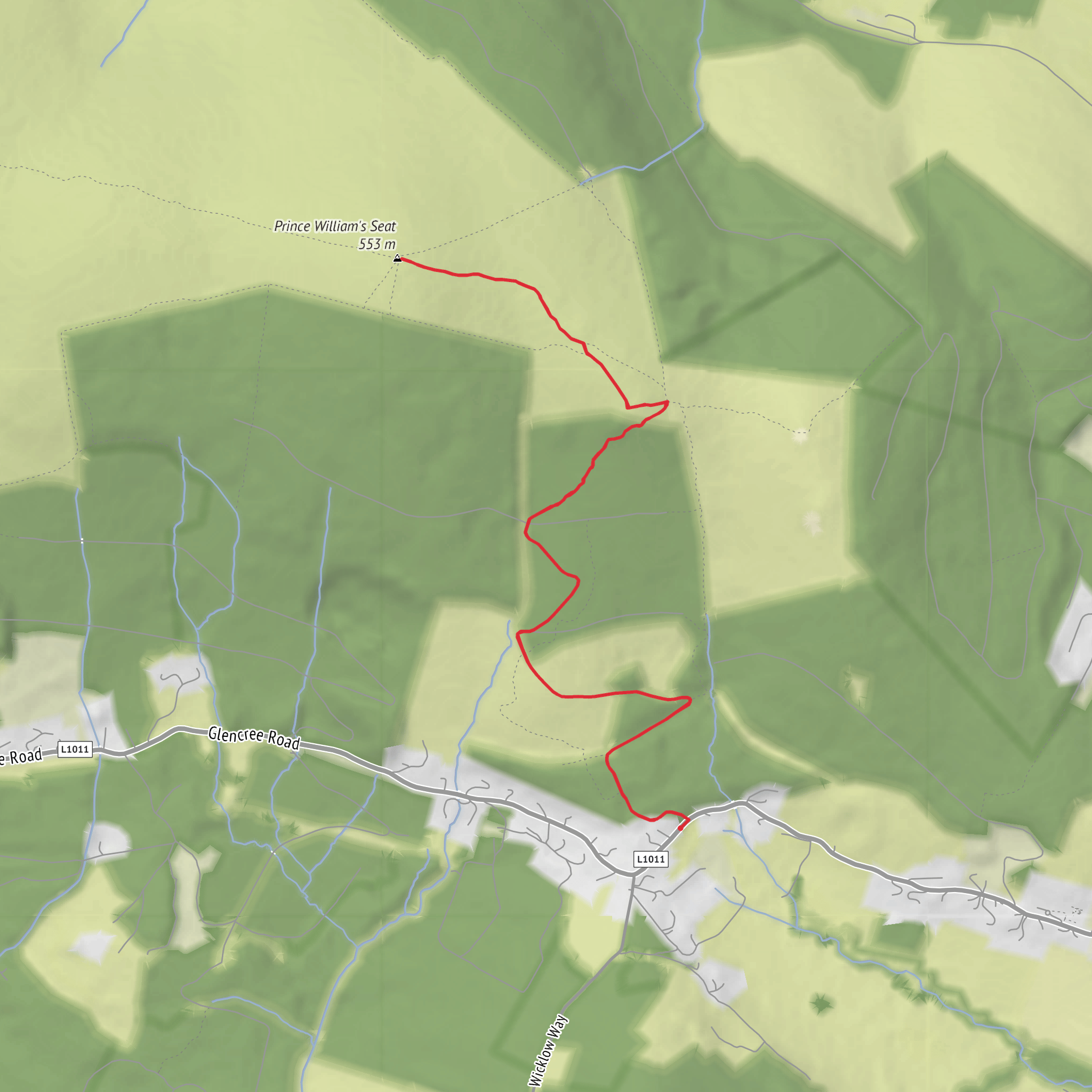
This medium-grade walk to Prince William’s Seat is a compact Wicklow mountain outing with enough climbing to feel substantial without becoming a full-day expedition. For a route of around 6 km / 3.7 miles with roughly 300 m / 984 ft of ascent, expect a steady effort rather than a long grind: the climbing is concentrated enough to raise the heart rate, but the distance keeps it manageable for hikers with a reasonable base level of fitness. The usual access point for this area is Curtlestown Woods car park, Glencree Road, near Enniskerry, County Wicklow, which is the nearest widely used start for Prince William’s Seat. HiiKER identifies Curtlestown Woods as the practical starting point for walks on this mountain. (hiiker.app)
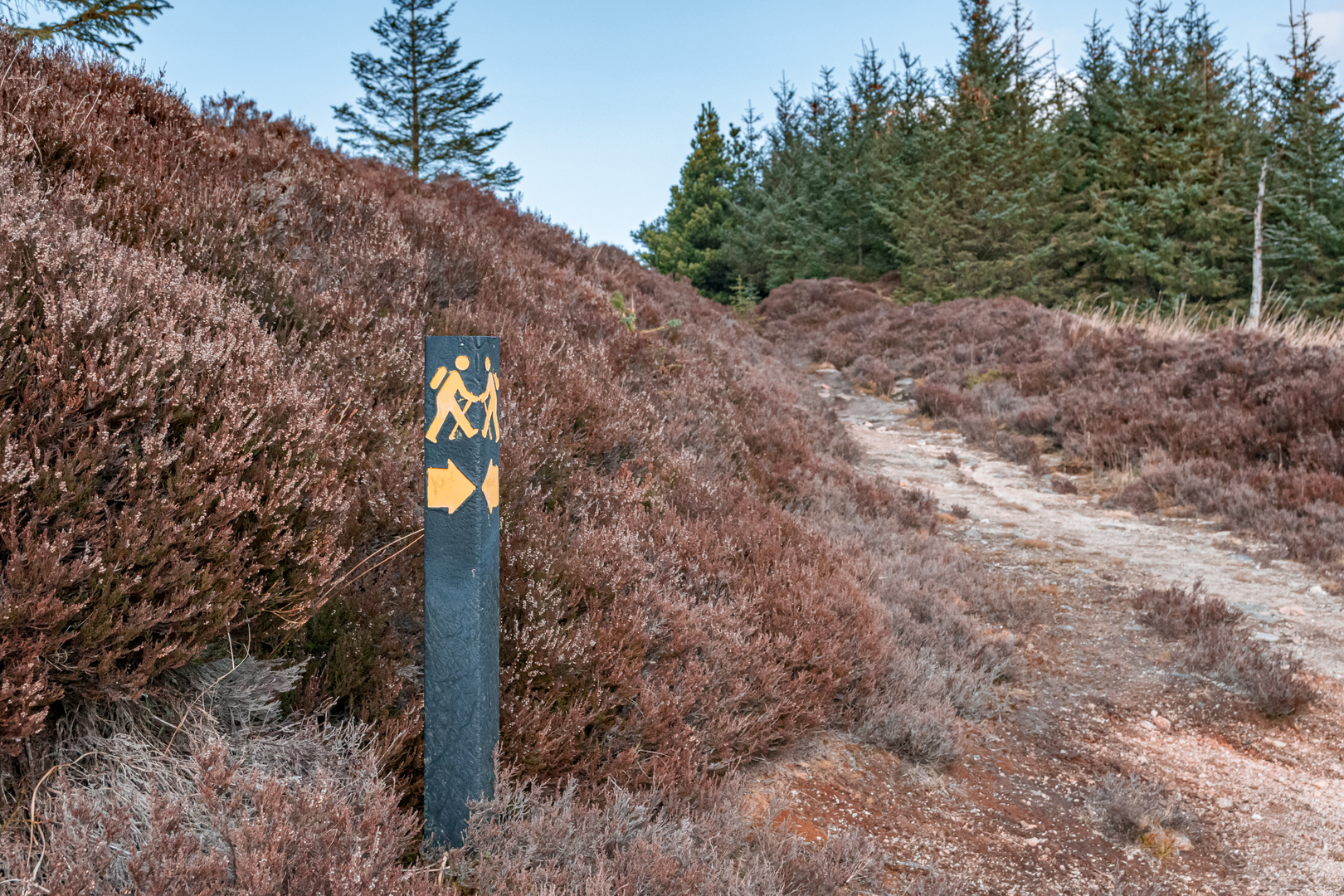
The route typically begins on forest track before breaking out onto more open mountain terrain. Underfoot, that means a mix of firm woodland road, rougher upland path, and sections that can turn wet, peaty, or slick after rain. Even on a shorter outing, the change from sheltered trees to exposed hillside is one of the defining features here. Once above the forest, the landscape opens quickly and the summit area feels broader and wilder than the mileage might suggest. HiiKER describes the wider Prince William’s Seat area as a mix of forest tracks, heathery moorland, and rougher mountain ground, and that is exactly the sort of terrain hikers should prepare for. (hiiker.app)
What to expect on the climb
The first part is usually the most straightforward for navigation, following broad tracks through commercial forestry and mixed woodland. This is the easiest place to settle into a rhythm before the route steepens. As height is gained, the trees begin to thin and the views start to widen toward the Dublin uplands, the Irish Sea coast, and deeper into the Wicklow Mountains on a clear day. Prince William’s Seat stands at about 555 m / 1,821 ft, and although it is not among Wicklow’s highest summits, it has an outsized viewpoint because of its position on the northern edge of the range. (hiiker.app)
Above the woods, the trail becomes more exposed to wind and weather. Mist can move in quickly on the higher ground, and the open sections can feel very different from the sheltered start. For that reason, route-finding should be planned in advance using HiiKER, especially if low cloud, rain, or fading light are possible. Waterproof footwear is a sensible choice here, and trekking poles can help on muddy descents or where the path is worn and uneven. (hiiker.app)
For a 6 km / 3.7 mile version of the walk, hikers should generally allow around 2 to 3 hours, depending on conditions, stops, and how direct the chosen line is. The elevation gain of about 300 m / 984 ft is enough to make the ascent feel sustained in places, so it suits walkers who are comfortable on hills rather than absolute beginners expecting a flat woodland stroll. The “medium” rating is fair: the challenge comes more from gradient, exposure, and changeable ground than from technical difficulty. The longer HiiKER loop in this area is about 11.2 km / 6.8 miles with 340 m / 1,115 ft of ascent, which helps frame what a shorter 6 km version is likely to feel like in effort terms. (hiiker.app)
Landmarks, landscape, and wildlife
Prince William’s Seat sits in a transition zone where the Dublin Mountains give way to the Wicklow uplands, so the scenery changes quickly over a short distance. Lower down, expect conifer plantation and forest roads; higher up, the character shifts to open heath, grass, and boggy mountain ground. Heather, gorse, and coarse upland grasses are typical features, especially in late summer when the hills can show strong purple and gold tones. The broader Wicklow Way corridor through this area is known for expansive views over coast and mountains, and Prince William’s Seat is specifically noted for those panoramas. (visitwicklow.ie)
Wildlife is often subtle rather than dramatic, but hikers should keep an eye out for small upland birds, raptors using the slopes and thermals, and the usual Wicklow mix of woodland and moorland species. In the forested approach, songbirds are common, while the open ground can support meadow pipits and other upland birds. Deer are present in parts of Wicklow, though sightings are never guaranteed. The main thing to watch for is not dangerous wildlife but livestock, soft ground, and rapidly changing weather. Dogs should be kept under close control where sheep are present.
Historical significance
This mountain has more historical interest than its modest height suggests. HiiKER notes that in the 1830s, a detailed survey
Surfaces
Unknown
Ground
Asphalt
Comments and Reviews
User comments, reviews and discussions about the Prince William's Seat, Ireland.
average rating out of 5
0 rating(s)