Download
3D Flyover
Add to list
More
9.9 km
~3 hrs
609 m
Loop
“From thunderous falls to lonely high ridges, this wild circuit feels far bigger than it looks.”
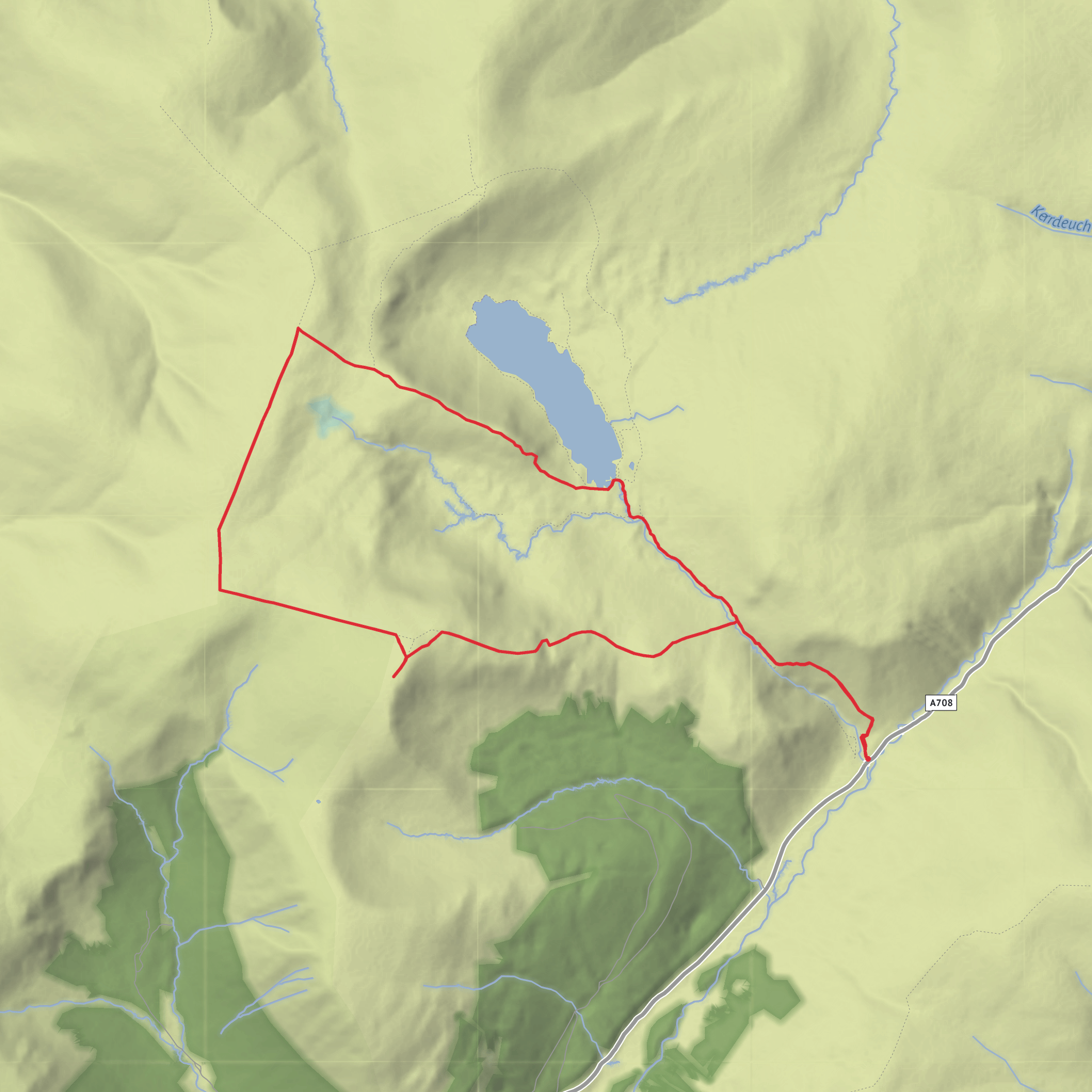
This is a compact but serious upland circuit in the Moffat Hills, climbing from the Grey Mare’s Tail reserve to Loch Skeen and then onto the broad high ground around Donald Cleuch Head and White Coomb. Although the distance is only about 10 km / 6.2 miles, the roughly 600 m / 1,970 ft of ascent, steep gradients, exposed terrain, and often wet ground make it feel much bigger than the numbers suggest. The route starts near the Grey Mare’s Tail car park in the Moffat Water Valley, the nearest useful landmark and access point, around 10 miles / 16 km north-east of Moffat on the A708. (nts.org.uk)
The opening section is one of the most dramatic short climbs in southern Scotland. From the car park, the path rises beside Grey Mare’s Tail, a striking 60 m / 197 ft waterfall that drops from Loch Skeen into the valley below. The lower path is steep and sustained, but it is generally clear underfoot, with pitched stone sections helping on the ascent. This first climb is where much of the route’s effort is concentrated, and it quickly gains height above the gorge with increasingly wide views back down Moffat Water. (nts.org.uk)
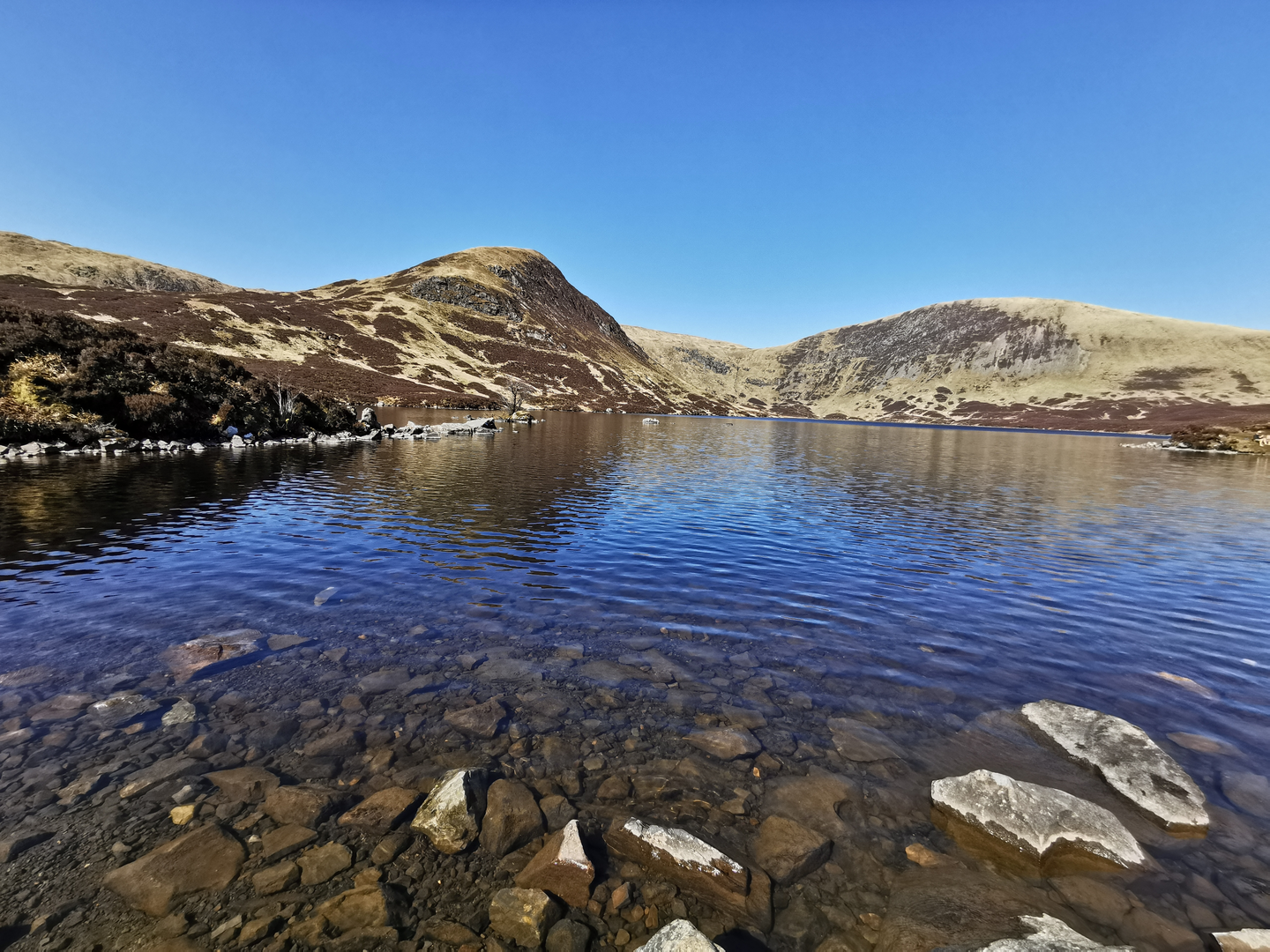
After roughly 2 km / 1.2 miles, the route reaches Loch Skeen, one of the defining landmarks of the walk and the highest major hill loch in southern Scotland. The setting here is notably wild: a long mountain loch backed by steep crags including Lochcraig Head and Mid Craig, with White Coomb rising beyond. The landscape is strongly shaped by glacial erosion, and Grey Mare’s Tail itself is part of a classic hanging-valley system, which explains the abrupt drop from loch to waterfall. (nts.org.uk)
Terrain and route character
Beyond Loch Skeen, the walk becomes more committing. The built path gives way to rougher hill terrain, and this is where hikers should expect slower progress. Ground conditions can be boggy, especially on the moorland and broad ridges, and there is a burn crossing that may become awkward after heavy rain. In mist, the upper section can feel featureless despite the surrounding high ground, so this is not a route to underestimate simply because it is relatively short. Checking the line carefully on HiiKER before setting out is sensible, especially if low cloud or strong wind is forecast. (walkhighlands.co.uk)
The climb toward Donald Cleuch Head and the higher ridge is less dramatic than the waterfall section but more demanding in a different way: longer, wetter, and more exposed. White Coomb reaches 821 m / 2,694 ft and is the highest summit in Dumfriesshire, and once on the upper ground the views can extend far south toward Northumberland and the Lake District in clear weather. The ridges are broad rather than narrow, but they can be very windy, and navigation becomes more important if visibility closes in. (nts.org.uk)
On the descent, expect tired legs and care-needed footing, particularly if returning by steep ground toward the lochside path. Wet rock, peaty sections, and eroded lines can all slow the final kilometres. For planning purposes, this is best treated as a mountain outing rather than a simple waterfall walk.
Landmarks, wildlife, and what to look for
Grey Mare’s Tail is the obvious headline feature, but the reserve is also notable for its upland ecology. The area supports rare upland plants and a rich mix of wildlife, and hikers should keep watch for peregrine falcons, ring ouzels, ospreys, and the feral goats that have roamed these hills for centuries. The path to Loch Skeen is one of the better places to scan the slopes for goats, while the crags and open sky often reward patient birdwatchers. (nts.org.uk)
The loch itself is a major visual turning point on the route. In calm weather it can appear unexpectedly still after the noise of the falls, while the enclosing crags give the basin a much more alpine feel than many walkers expect in southern Scotland. Higher up, the character changes again to open, rounded hill country, with long grassy and peaty ridges replacing the rocky drama below.
There is also real historical depth here. The wider Grey Mare’s Tail area has evidence of human presence dating back at least to the Iron Age, and the valley is associated with the 17th-century Covenanters. Watch Knowe, in the valley, was reportedly used as a lookout to monitor the approach of government troops. That history adds another layer to what can otherwise feel like a purely natural landscape.
Surfaces
Unknown
Gravel
Comments and Reviews
User comments, reviews and discussions about the Loch Skeen, Donald Cleuch Head, White Coomb Loop, Scotland.
average rating out of 5
0 rating(s)
