Download
Preview
Add to list
More
8.5 km
~2 hrs 21 min
393 m
Loop
“A steep, story-rich circuit weaving summit drama, sweeping views, and striking sandstone landmarks.”
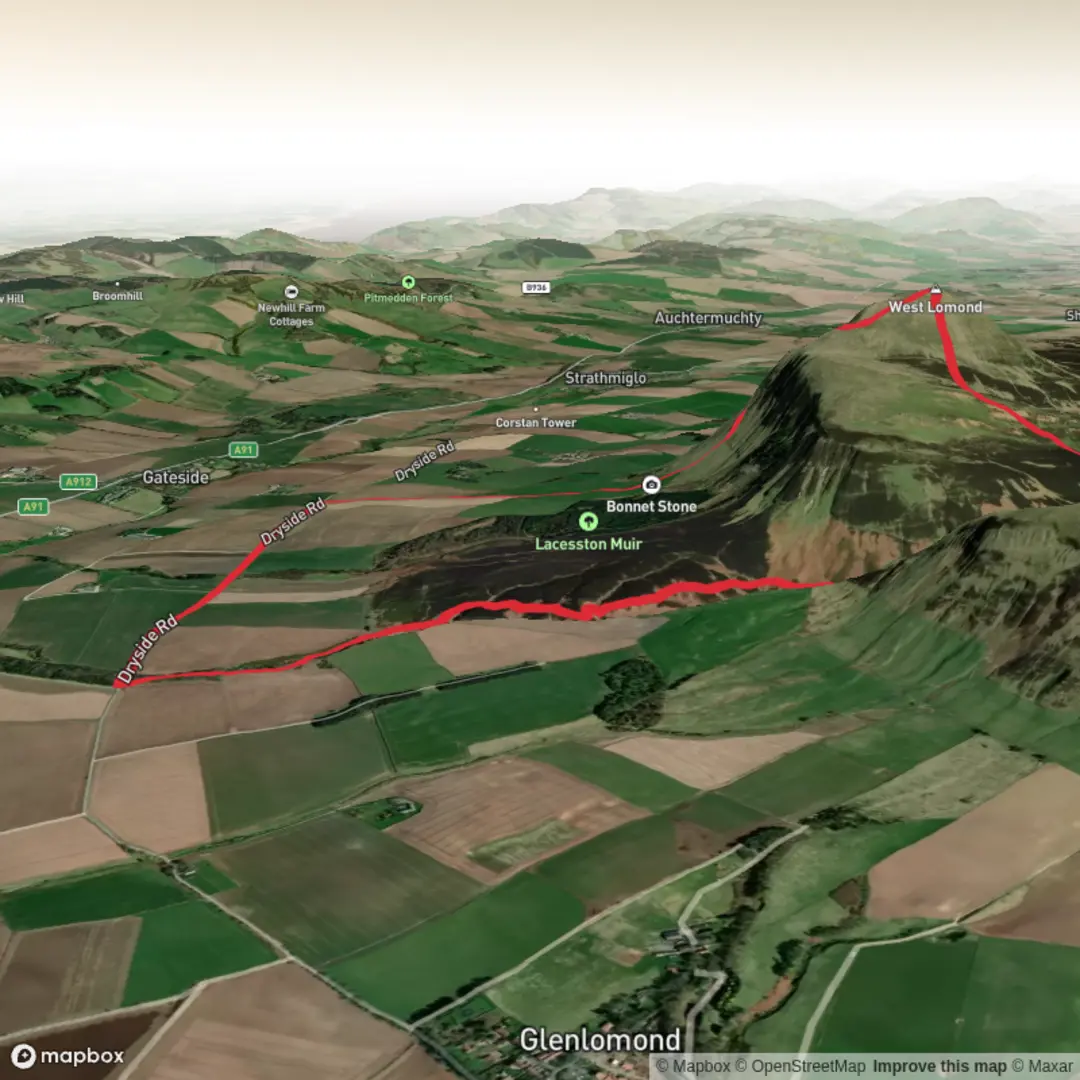
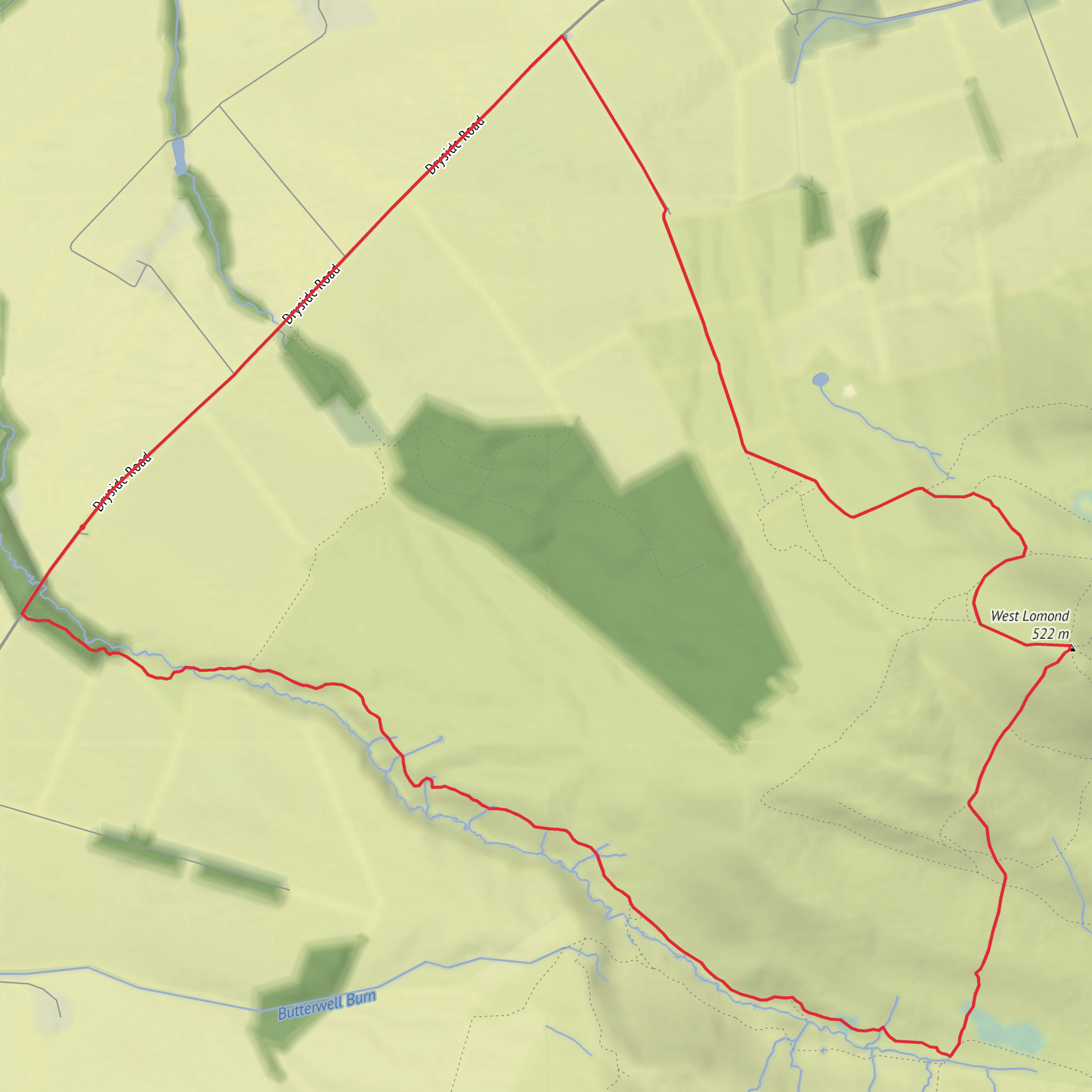
This medium-grade loop in the Lomond Hills packs a lot into roughly 8 km / 5 miles, with about 400 m / 1,312 ft of ascent. The route combines a steep climb to West Lomond, the highest point in Fife at 522 m / 1,713 ft, with a return through Glen Vale past some of the area’s most distinctive rock formations, including the Bunnet Stane and John Knox’s Pulpit. (walkhighlands.co.uk)
The walk usually begins at the Bunnet Stane parking area on Dryside Road, near Gateside in Fife, a commonly used trailhead marked on mapping and walking guides at approximately grid reference NO 184 081. If you are converting the start point to a practical landmark for navigation, the nearest well-known access point is Bunnet Stane Car Park, Dryside Road, near Gateside, Fife. (walkhighlands.co.uk)
For drivers, this is the simplest approach: head for Gateside or the Dryside Road approach below West Lomond and use the Bunnet Stane parking area. Some guides also reference Glen Vale car parking farther along the same road, but for this loop the Bunnet Stane parking area is the most direct starting point. Public transport is limited here. WalkHighlands notes public transport information for the route, while Countryfile states there is effectively no direct public transport to the start, so hikers relying on buses should expect to travel to a nearby village or town first and then use a taxi or a longer road approach on foot. (walkhighlands.co.uk)
What the route is like
From the start, the route heads toward the Bunnet Stane, one of the Lomond Hills’ best-known geological curiosities. This large, mushroom-like sandstone boulder sits below the escarpment of West Lomond and is an early highlight before the main climb begins. The ascent from here is the crux of the walk: a steep, sustained pull up the north slopes of West Lomond, gaining most of the day’s elevation in a relatively short distance. Expect the uphill section to feel strenuous despite the modest overall mileage. (walkhighlands.co.uk)
Underfoot, the climb can be grassy, worn, and slippery when wet, with some very steep sections both on the ascent and especially on the descent into Glen Vale. Ramblers and other route descriptions specifically note that care is needed on the steep grassy hillside during the return. In windy or poor visibility, the broad upper slopes can also feel more exposed than the map suggests, so this is a route where checking conditions beforehand and carrying layers is sensible. (ramblers.org.uk)
At the summit, the reward is a wide-ranging outlook over Fife and the surrounding hills. West Lomond stands prominently above the landscape, and because it is the county high point, the views are one of the main reasons people choose this route. On a clear day, the open plateau and summit cone give a strong sense of height despite the hill’s moderate elevation. (fifewalking.com)
Landmarks, geology and history
The Bunnet Stane and John Knox’s Pulpit are not just scenic features; they are part of what makes this walk distinctive. John Knox’s Pulpit is an eroded grey sandstone outcrop in Glen Vale, formed from ancient desert sand dunes dating to the late Devonian period. NatureScot-linked local interpretation describes the rock as part of sandstone laid down roughly 410 to 353 million years ago, when this region lay much closer to the Equator. (fifecoastandcountrysidetrust.co.uk)
Historically, the name “John Knox’s Pulpit” connects the site with Scotland’s Reformation story. Local tradition holds that reforming preachers or later conventicles may have gathered in this secluded glen, though Welcome to Fife notes that John Knox himself is not known to have actually preached from the outcrop. That makes the site historically evocative rather than firmly documented, but it still adds a strong sense of place to the return leg. (welcometofife.com)
One important planning point: the pathway directly below John Knox’s Pulpit has been reported as closed for public safety because the rock remains in a hazardous condition. If you are planning the route in detail, it is worth checking the latest line on HiiKER and following any current diversions or on-ground signage rather than assuming older route descriptions are fully current. (fifecoastandcountrysidetrust.co.uk)
Nature and wildlife
The Lomond Hills Regional Park landscape mixes open hill ground, escarpment, rough grassland, and sheltered glen scenery. Around Glen Vale, the terrain feels greener and more enclosed, while the upper slopes of West Lomond are more exposed and upland in
Surfaces
Unknown
Dirt
Asphalt
Sand
Grass
Wood
Comments and Reviews
User comments, reviews and discussions about the John Knox's Pulpit, West Lomond and Bunnet Stane Loop, Scotland.
average rating out of 5
0 rating(s)
