Download
3D Flyover
Add to list
More
3.2 km
~47 min
92 m
Out and Back
“A short, windswept Lewis outing where quiet lochs, boggy moor, and big skies feel wonderfully wild.”
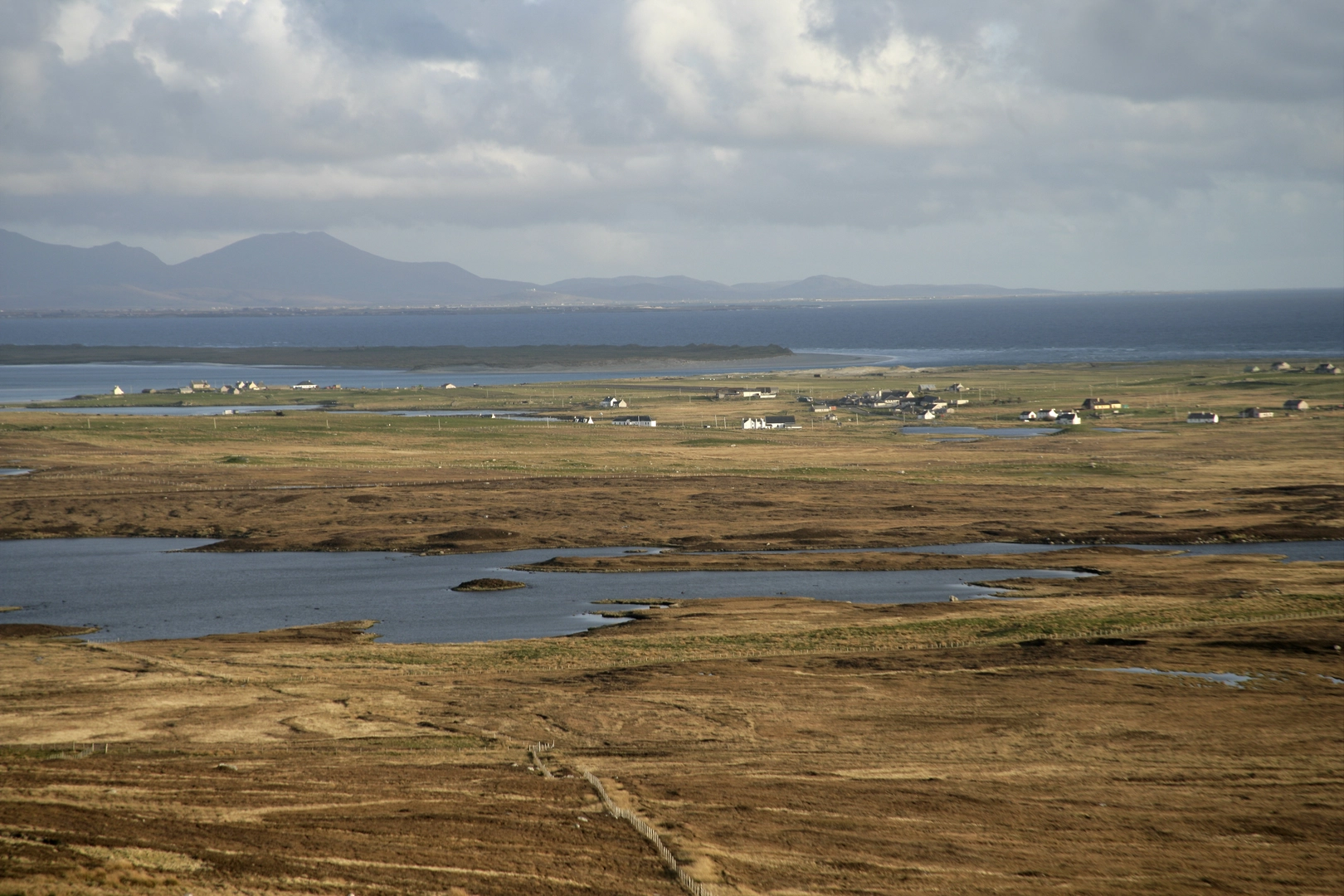
This short moorland outing on the Isle of Lewis links a quiet loch with a modest hill that gives a much bigger sense of space than its statistics suggest. At around 3 km / 1.9 miles with roughly 100 m / 330 ft of ascent, it is a compact walk, but the terrain and exposure make it feel more serious than the distance implies. The start is near Achmore, Isle of Lewis, Outer Hebrides, HS2 9DU, the small inland village on the A858 that sits in the island’s loch-studded peat moorland. Achmore is one of the few inland settlements on Lewis and lies roughly 10 miles east of the Callanish Stones and about 20 miles from Tarbert. (en.wikipedia.org)
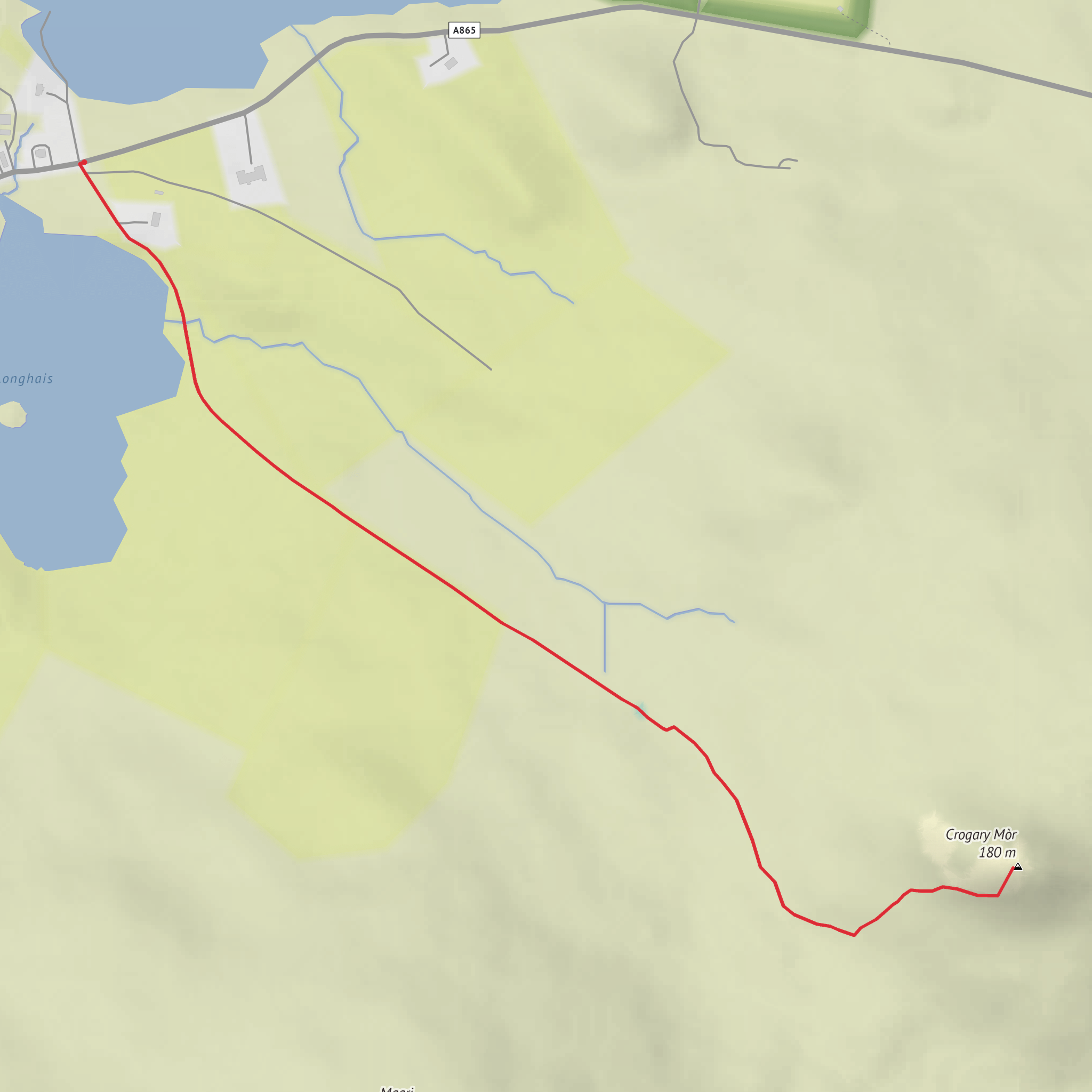
From the outset, expect open country rather than a waymarked lowland path. The route heads out from the Ahmore/Achmore area toward Loch Aonghais, then rises onto Crogearraidh Mor, a low but prominent hill that stands out clearly above the surrounding moor. Even though the summit is under 200 m, it is described as a notably prominent feature in the landscape, and the reward is a broad outlook over lochs, peatland, and the wider interior of Lewis. (themodernantiquarian.com)
Terrain and what to expect
The walking is likely to be a mix of rough ground, faint paths or trods, and boggier sections typical of the Lewis interior. This is not a hike where the elevation is the main challenge; footing, wet ground, and wind exposure are more likely to dictate the feel of the day. After rain, peat can become saturated and soft underfoot, and even on a short route waterproof footwear is strongly recommended. Because the landscape is open and can appear deceptively featureless in poor visibility, carrying and checking the route on HiiKER is a sensible precaution.
Loch Aonghais is the first major landmark and gives the walk much of its character. The loch sits in a broad, quiet basin of moor and water, with Crogearraidh Mor rising nearby as a natural objective. The ascent itself is relatively short, but the hill’s shape makes it an excellent viewpoint over the surrounding lochans and rolling moor. On a clear day, the views should extend across central Lewis and toward higher ground farther south and west; in mist, however, the same openness can make navigation less intuitive than the mileage suggests. The route is best approached as a short hill-and-moorland walk rather than a simple stroll.
Landmarks, wildlife, and atmosphere
The defining scenery here is classic inland Lewis: peat moor, scattered freshwater lochs, low rocky rises, and a huge sky. This is a landscape shaped as much by water and weather as by topography. Around Loch Aonghais, keep an eye out for wetland birdlife and moorland species; the wider Lewis interior is known for open-country birds and a strong sense of remoteness, even close to the road. The area around Achmore also includes loch and bog habitats of ecological interest, with Loch an Ach lying within the Achmore Bog Site of Special Scientific Interest, which helps explain the rich mosaic of peatland and freshwater environments in the district. (hebrideanconnections.com)
One notable historic feature in the vicinity is Dun Aonais, a small dun or fortified site associated with the banks of Loch Aonghais. The place-name has been interpreted as “fort of Aonghus Fionn,” adding a layer of early settlement history to what otherwise feels like a purely natural landscape. Nearby Achmore is also known for its stone circle, a reminder that this central part of Lewis has been occupied and travelled through for a very long time. (themodernantiquarian.com)
The wider historical significance of the region is tied to crofting, estate history, and the unusual inland position of Achmore. Lewis settlements are mostly coastal, but Achmore developed as one of the island’s rare inland townships. Historical records note 19th-century tenancy and eviction pressures in the area, reflecting the broader social history of the Hebrides during the era of estate reorganisation and clearance. That background gives extra depth to the walk: the moorland may feel empty, but it is part of a lived and contested landscape. (en.wikipedia.org)
Planning and access
By car, the easiest approach is via the A858 through Achmore, the main road linking Stornoway with west Lewis and the Callanish area. Parking is likely
Surfaces
Unknown
Asphalt
Comments and Reviews
User comments, reviews and discussions about the Loch Aonghais and Crogearraidh Mor from Ahmore, Scotland.
average rating out of 5
0 rating(s)