Download
3D Flyover
Add to list
More
86.1 km
5 days
1265 m
Multi-Day
“Embark on a historic and scenic 86-km hike through Orkney's St Magnus Way, a journey of medium difficulty and rich heritage.”
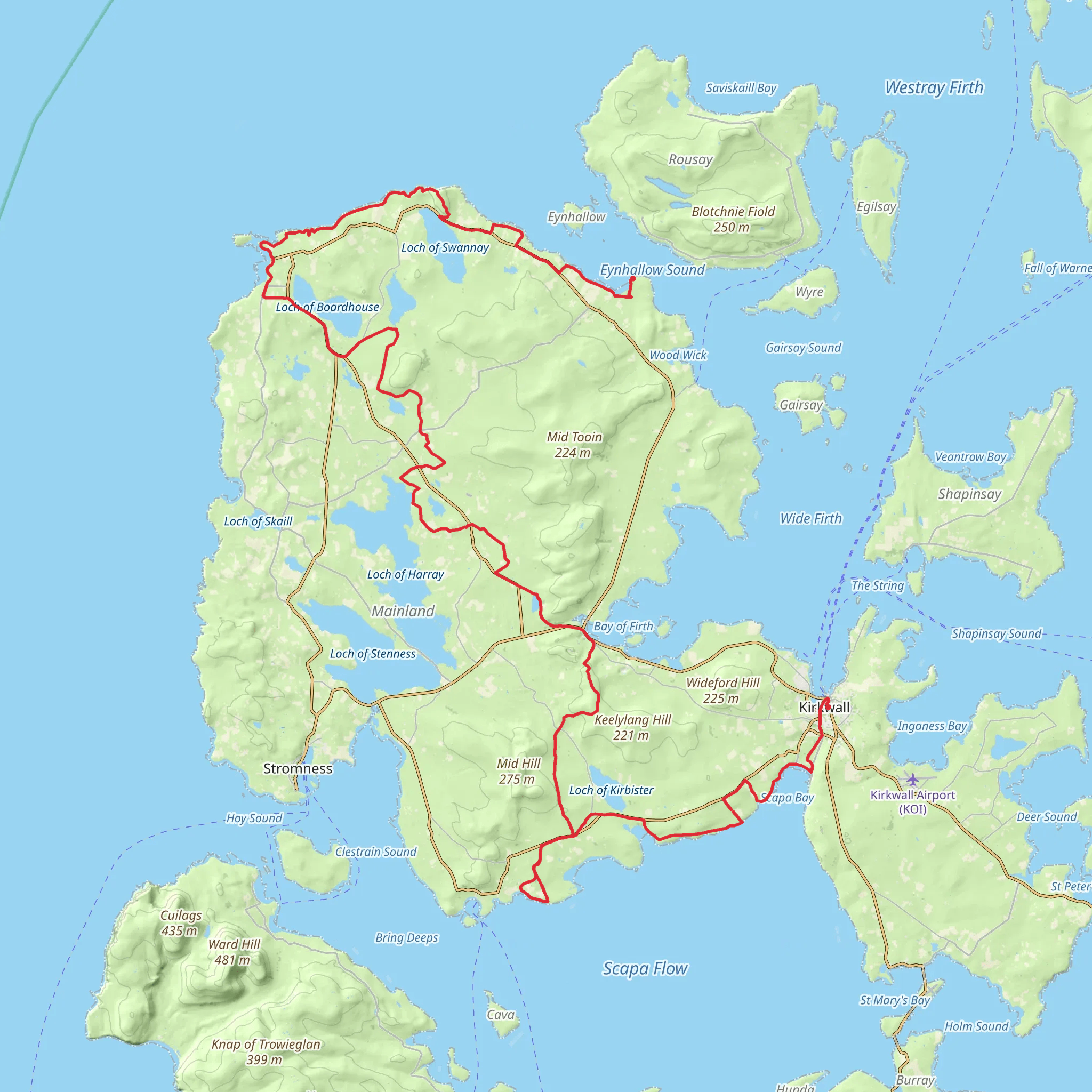
Spanning approximately 86 kilometers (about 53 miles) with an elevation gain of around 1200 meters (nearly 3937 feet), the St Magnus Way is a point-to-point trail that offers a medium difficulty level for hikers. This trail is steeped in history and natural beauty, located near the Orkney Islands in Scotland.
Getting to the Trailhead
The starting point of the St Magnus Way is near the Orkney Islands, which can be reached by ferry from mainland Scotland. Once on the Orkney Islands, you can drive or take public transport to the trailhead. If you're driving, you'll find parking available near the start of the trail. For those relying on public transportation, buses serve the area and can drop you near the trailhead.
The Journey Begins
As you embark on the St Magnus Way, you'll traverse a variety of landscapes, including rugged coastlines, rolling hills, and serene farmland. The trail is well-marked, but carrying a reliable navigation tool like HiiKER is advisable to ensure you stay on the right path.
Historical Significance
The trail is named after St Magnus, a Norse Earl of Orkney, and follows a route that reflects the story of his life and martyrdom. As you hike, you'll encounter historical landmarks such as ancient standing stones, Norse ruins, and medieval churches. The trail not only offers a physical journey but also a spiritual and historical pilgrimage, allowing hikers to immerse themselves in the rich heritage of the Orkney Islands.
Natural Wonders and Wildlife
The St Magnus Way is a haven for nature enthusiasts. The coastline sections provide opportunities to spot seabirds, seals, and even whales during certain times of the year. Inland, the trail meanders through heather-clad moorlands and past lochs where you might catch a glimpse of otters or native bird species.
Navigating the Trail
The route is divided into sections, each with its own unique character and challenges. The elevation gain is spread throughout the trail, with some sections being relatively flat and others featuring more strenuous climbs. Hikers should be prepared for the unpredictable Scottish weather by packing appropriate gear for rain, wind, and potentially even sunshine.
Preparing for Your Hike
It's recommended to carry sufficient water and food, as there are stretches of the trail with limited access to amenities. Wearing sturdy hiking boots is essential due to the varied terrain, and layering your clothing will help you adapt to changing temperatures. Always check the local weather forecast before setting out and plan your hike accordingly.
Accommodations and Logistics
For those looking to complete the trail over several days, there are accommodation options ranging from campsites to bed and breakfasts along the route. It's wise to book these in advance, especially during peak hiking season. If you're planning a multi-day hike, consider arranging transportation back to your starting point or onward from the trail's end.
By preparing adequately and respecting the trail's natural and historical significance, hikers can look forward to an enriching experience on the St Magnus Way.
What to expect?
Frequently asked questions
How long does it take to walk the St Magnus Way in Orkney?
The St Magnus Way is about 86.11 km, or roughly 58 miles, and is usually walked over several days rather than in one push. The route is commonly divided into six mainland sections, with an additional short Egilsay section, finishing at St Magnus Cathedral in Kirkwall. A strong walker could cover longer sections in fewer days, but most itineraries spread it across 5 to 7 days.
Where does the St Magnus Way start and finish?
The St Magnus Way begins with the pilgrimage section on Egilsay, where key sites linked to the death of St Magnus include St Magnus Church, the memorial, and the beach. On Mainland Orkney, the walking route runs from the Gurness area through Birsay, Dounby, Finstown, and Orphir, and finishes at St Magnus Cathedral in Kirkwall.
Is the St Magnus Way a hard walk?
The St Magnus Way is generally considered an easy long-distance trail, although the full route still covers 86.11 km with about 1,265 meters of climbing. The terrain includes coastal walking, farm tracks, minor roads, hill sections, and a short forest stretch, so the challenge comes more from the multi-day distance and exposure than from technical ground.
Can the St Magnus Way be walked in sections?
Yes. The St Magnus Way is set out as a series of distinct stages, including Egilsay, Evie or Gurness to Birsay, Birsay to Dounby, Dounby to Finstown, Finstown to Orphir, and Orphir to Kirkwall. That makes it practical to walk as day hikes, especially for anyone staying in Kirkwall, Finstown, or elsewhere on Mainland Orkney.
How do hikers get to the start of the St Magnus Way on Egilsay?
The Egilsay section is reached by ferry from Tingwall, with sailings operated via Rousay. The Egilsay walk itself is short at about 5.6 km and around 62 meters of ascent, but the ferry journey takes planning because getting there and back can use most of a day. The mainland pilgrimage section can then be picked up separately from the Gurness area.
What are the main landmarks on the St Magnus Way?
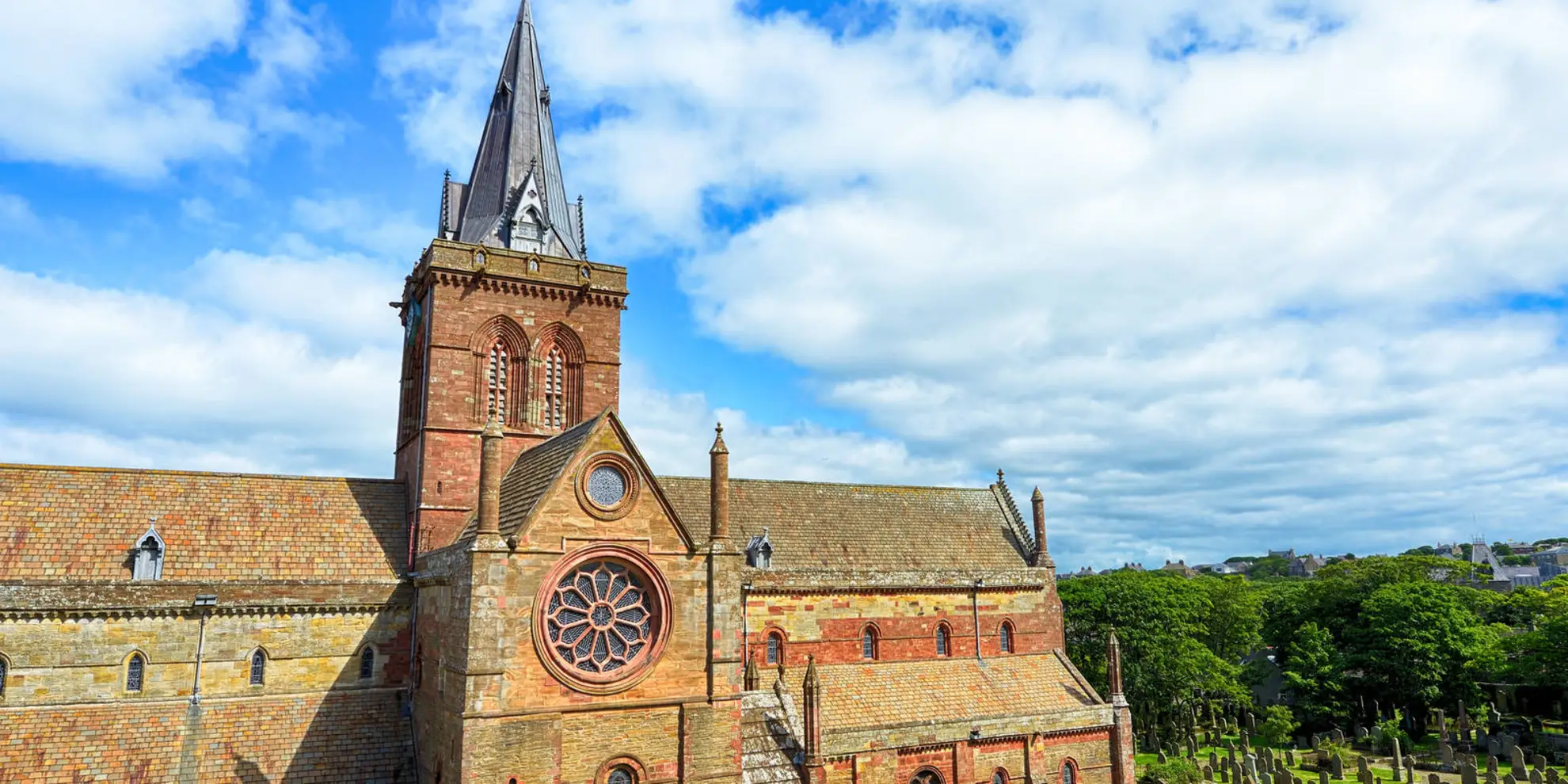
The St Magnus Way links places closely tied to the story of Orkney’s patron saint. Notable landmarks include St Magnus Church on Egilsay, St Magnus Kirk in Birsay, the Milestone Kirk in Dounby, the Round Kirk at Orphir, and the final arrival at St Magnus Cathedral in Kirkwall. The route also passes through landscapes such as the coast near Gurness and the shoreline around Scapa Flow.
Is there parking on the St Magnus Way route?
Parking is available at some stage starts rather than as one single trailhead car park. For example, there is a small car park opposite St Magnus Church at the Birsay stage start, and walkers using the Egilsay section typically access the ferry from Tingwall. Because this is a point-to-point pilgrimage route, transport planning matters more than parking at one end.
Comments and Reviews
User comments, reviews and discussions about the St Magnus Way, Scotland.
4.28
average rating out of 5
25 rating(s)