Download
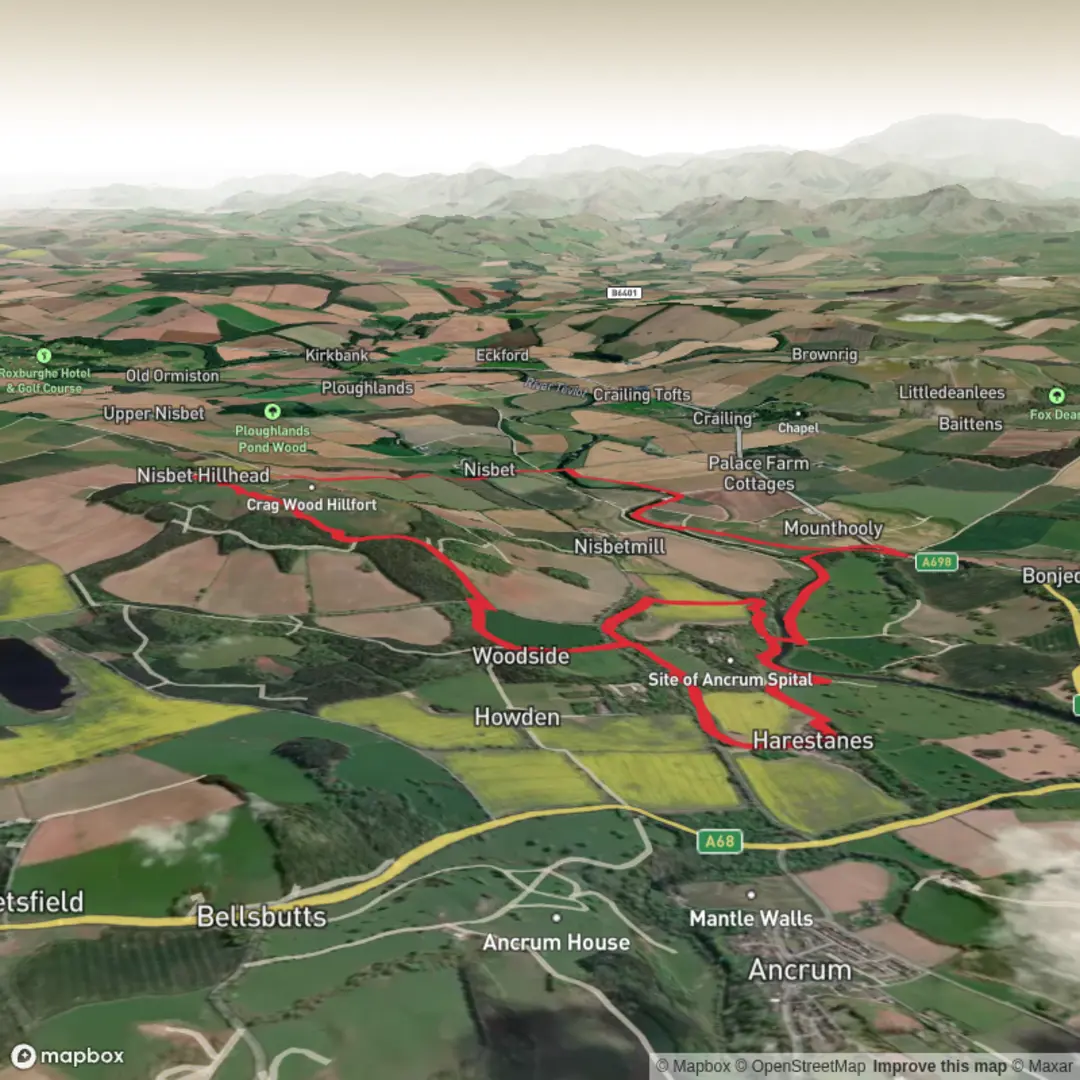
3D Flyover
Add to list
More
11.1 km
~2 hrs 29 min
156 m
Loop
“A varied Borders loop weaving woodland, history, hilltop drama, and tranquil lochside calm.”
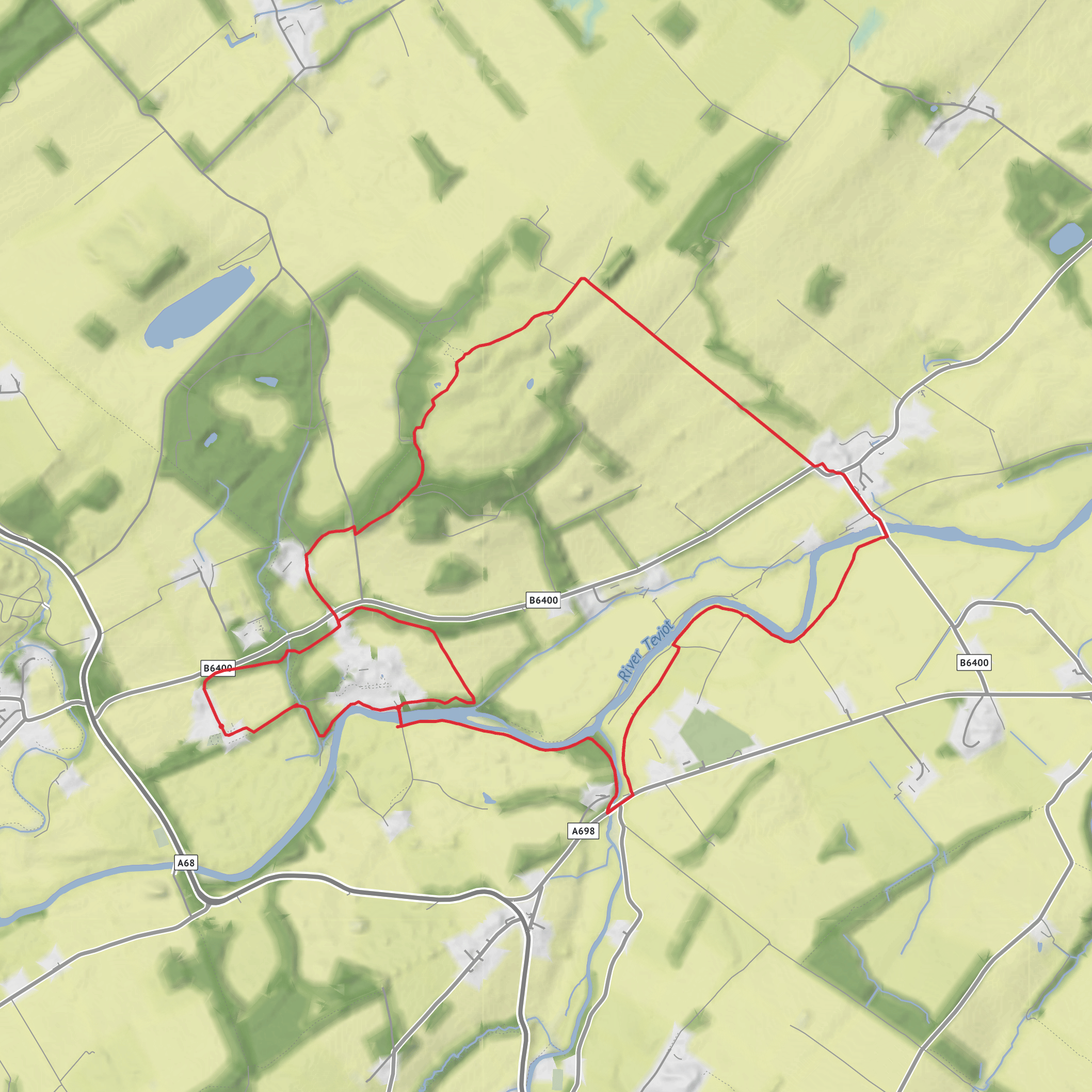
This easy loop of around 11 km / 6.8 miles with roughly 200 m / 656 ft of ascent makes a very good half-day outing in the Scottish Borders, combining estate woodland, open hill, a prominent monument, quiet lanes, and a couple of smaller bridges on the return. The route is generally straightforward, but it feels more varied than the statistics suggest: the first half is gentle and wooded, the middle section climbs more decisively onto Peniel Heugh, and the second half settles into a quieter circuit through fields, lochside views, and forest paths before returning to the start. The usual starting point is Harestanes Countryside Visitor Centre, Ancrum, TD8 6UQ, near Jedburgh. (walkhighlands.co.uk)
From the visitor centre, the walk begins easily on broad paths through attractive deciduous woodland. Early on, the gradients are mild, so this is a good stretch to settle into a pace before the climb begins. There are mature beech trees, open estate edges, and glimpses toward the grounds around Monteviot. In wetter weather, some of these lower woodland paths can be soft underfoot, but they are usually still manageable for most walkers with decent footwear. Walkers using HiiKER for navigation should find this opening section useful for confirming the early junctions, especially where estate drives and signed paths intersect. (walkhighlands.co.uk)
Climb to Peniel Heugh
The main ascent starts after crossing minor roads and estate tracks, climbing through woodland toward Peniel Heugh. Although the hike is rated easy, this is the section that gives it most of its 200 m / 656 ft of elevation gain. The slope is not mountainous, but it is sustained enough to notice, particularly if the ground is muddy. As the trees thin, the monument begins to dominate the skyline, giving a clear visual target for the final pull to the top. (walkhighlands.co.uk)
At the summit stands the Waterloo Monument, a striking tower about 150 ft / 46 m high, built between 1817 and 1824 to commemorate the Battle of Waterloo. The hill itself is older still, with the site also associated with an Iron Age fort, so the high point carries layers of history rather than just one landmark. The monument was originally designed by William Burn; after an early collapse, it was redesigned and completed by Archibald Elliot. The tower is not currently open to the public, but even from outside it is the defining feature of the walk, and the hill gives broad views across Roxburghshire toward the Eildon Hills on a clear day. (walkhighlands.co.uk)
Woodland, lochside and return leg
The descent northwest from Peniel Heugh is usually the messiest part of the loop. Paths through the woods can be muddy, and after rain this section deserves a little more care than the “easy” grade might imply. Trekking poles are optional rather than essential, but they can help on the slicker patches. Once lower down, the route joins quiet minor roads and passes with views over Folly Loch, which adds a calmer, more open feel after the hilltop section. (walkhighlands.co.uk)
The final woodland leg follows part of St Cuthbert’s Way and, for a stretch, the line of the old Roman road known as Dere Street, which once linked York with the Firth of Forth. That gives the return section a strong historical thread: after climbing to a monument built for a 19th-century battle, you are also walking through a landscape shaped by much earlier military and travel routes. The path then winds through trees, crosses small footbridges, and returns toward Harestanes. (walkhighlands.co.uk)
Nature on this route is typical of mixed Borders woodland and estate country. Expect broadleaf woodland around the lower sections, open grassy and heathery hill ground near the top, and quieter waterside habitat around Folly Loch. Birdlife can include common woodland species and water-associated birds near the loch, while the edges of the woods and fields are the places where roe deer are most likely to be seen. In spring and summer, the woodland margins are often the most attractive part of the route for wildflowers and fresh leaf cover; in autumn, the deciduous sections are
Surfaces
Unknown
Dirt
Grass
Asphalt
Wood
Gravel
Unpaved
Comments and Reviews
User comments, reviews and discussions about the Waterloo Monument, Natives Wood and Suspension Bridge Loop, Scotland.
average rating out of 5
0 rating(s)
