Download
3D Flyover
Add to list
More
933.0 km
49 days
12319 m
Multi-Day
“Traverse the historic Camino del Norte, a scenic pilgrimage weaving through Spain's cultural and natural splendors.”
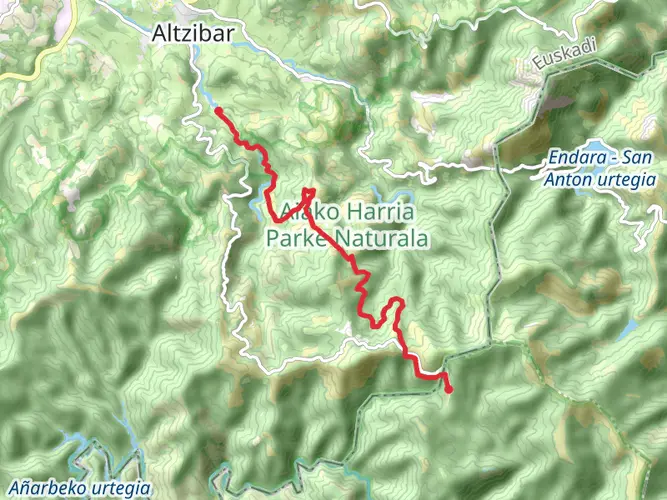
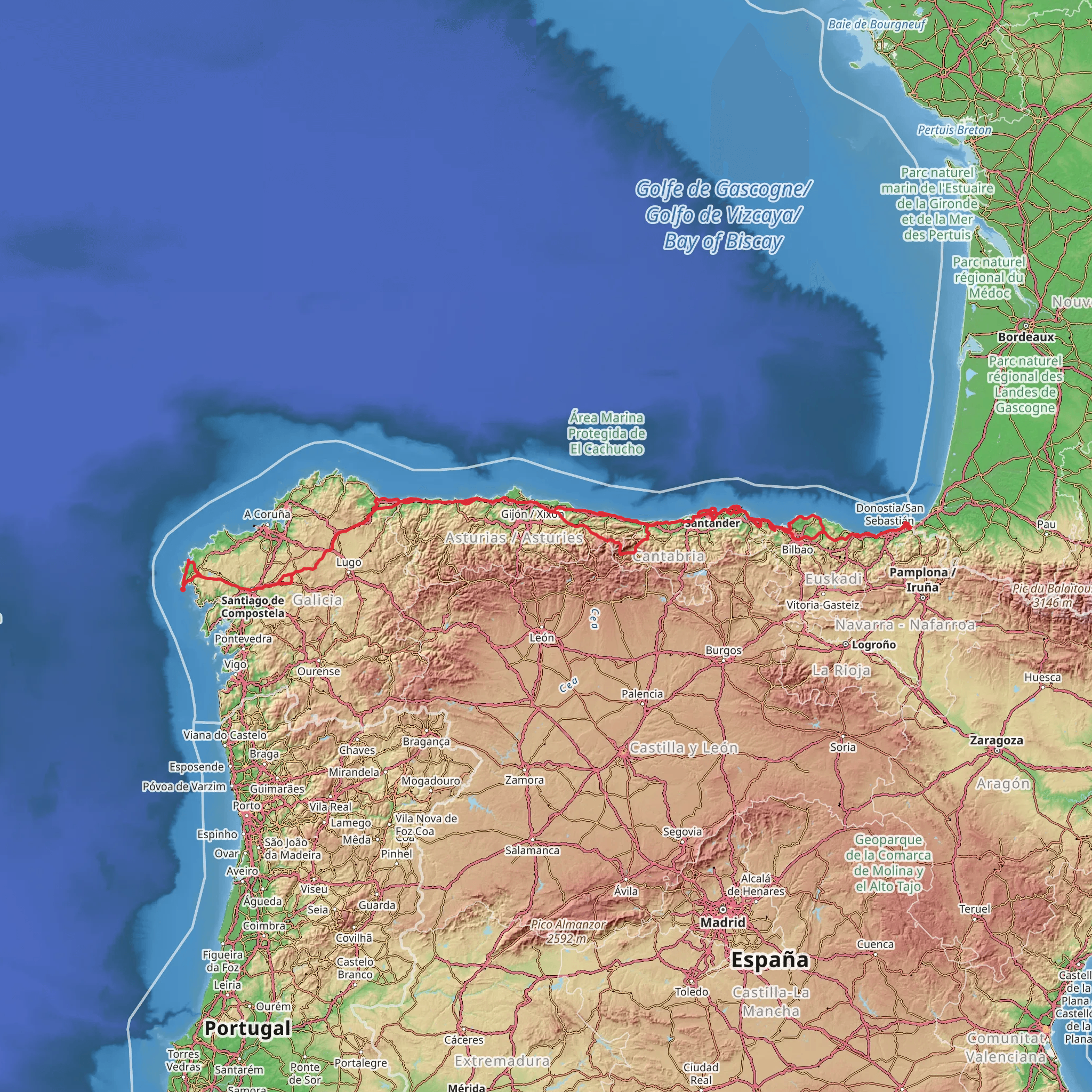
The Camino del Norte, also known as the Northern Way, is a spectacular long-distance pilgrimage route that follows the northern coast of Spain, starting near the town of Irun, close to the French border. This trail is a part of the famous Camino de Santiago network, leading to the shrine of the apostle Saint James the Great in the cathedral of Santiago de Compostela in Galicia.
Getting to the Trailhead
To begin your journey on the Camino del Norte, you can reach Irun by various means of transportation. If you're coming by air, the nearest airport is San Sebastián Airport, which is approximately 11 km (about 7 miles) from Irun. From there, you can take a taxi or a bus to reach the town. For those preferring to travel by train, Irun has a railway station with connections to major Spanish cities. By car, Irun is accessible via the AP-8 motorway.
Trail Overview
Spanning roughly 933 km (about 580 miles) with an elevation gain of around 12,300 meters (approximately 40,354 feet), the Camino del Norte offers a medium difficulty level, making it accessible to hikers with a reasonable level of fitness. The trail is a point-to-point path, meaning it starts and ends at different locations, and it takes you through the Basque Country, Cantabria, Asturias, and finally Galicia.
Cultural and Historical Significance
The Camino del Norte traverses a region rich in history and culture. It's a less crowded alternative to the Camino Frances, offering a more tranquil experience. The trail passes through ancient towns and cities, each with its own historical landmarks, such as the Gothic churches and medieval bridges. Pilgrims have been walking this route for centuries, and you'll encounter numerous chapels, hermitages, and monasteries that have served as spiritual waypoints for those on their journey to Santiago de Compostela.
Landmarks and Nature
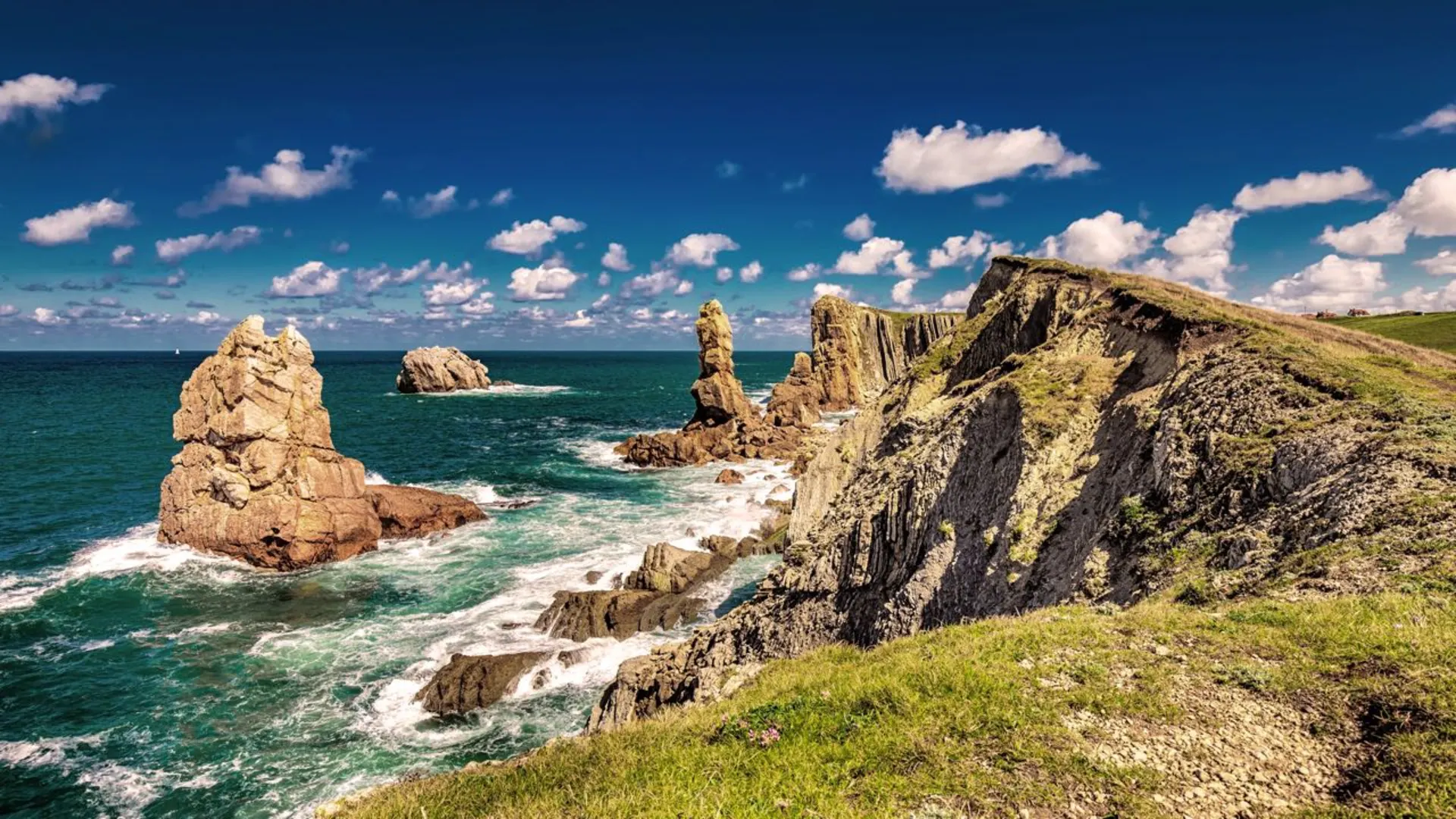
As you embark on the Camino del Norte, you'll be greeted by the rugged coastline, pristine beaches, and the lush greenery of northern Spain. The trail often diverges from the coast, taking you through forests, rolling hills, and rural landscapes. Notable cities along the route include San Sebastián, known for its culinary scene; Santander, with its beautiful bay; and Gijón, a city with a rich Roman history.
Wildlife
The diverse ecosystems along the Camino del Norte are home to a variety of wildlife. Keep an eye out for birds such as the European robin, the goldfinch, and birds of prey like the peregrine falcon. In the more remote and wooded areas, you might spot deer, wild boar, and even the elusive Iberian wolf.
Navigation and Planning
When planning your hike, consider using HiiKER to help with navigation and to locate essential waypoints such as accommodations, water sources, and food stops. The app can be invaluable in keeping you on the right path and ensuring you have the most up-to-date information.
Preparation Tips
Given the length and varied terrain of the Camino del Norte, it's essential to prepare adequately. Ensure you have comfortable footwear, as you'll be walking significant distances daily. Pack light but include rain gear, as the northern coast of Spain is known for its unpredictable weather. It's also advisable to carry a basic first aid kit, sun protection, and a hat.
Accommodation
Along the Camino del Norte, you'll find a range of accommodations, from pilgrim hostels known as albergues to hotels and guesthouses. It's wise to book ahead during peak seasons to secure your spot, especially in the smaller towns where options may be limited.
Conclusion
Embarking on the Camino del Norte is not only a physical journey but also a voyage through the rich cultural tapestry and natural beauty of northern Spain. With proper preparation and an open heart, this trail offers a deeply rewarding experience for those seeking both adventure and contemplation.
Frequently asked questions
How many days does the Camino del Norte usually take from Irun to Santiago de Compostela?
The Camino del Norte is about 932.95 km from Irun to Santiago de Compostela, so most walkers need around five to six weeks. A common breakdown is roughly 35 walking stages, which usually works out to about 35 to 45 days depending on pace, rest days, and whether shorter stage splits are used.
How difficult is the Camino del Norte compared with other Camino routes?
The Camino del Norte is generally considered a medium-difficulty long-distance route, but its 12,319 m of total ascent makes it more demanding than flatter Camino options. The route mixes long coastal days with repeated climbs and descents through the Basque Country, Cantabria, Asturias, and Galicia, so the challenge comes from cumulative elevation as much as distance.
What are the main stages of the Camino del Norte from Irun?
A commonly used stage plan breaks the Camino del Norte into about 35 walking stages starting with Irun to San Sebastián, then continuing through places such as Zarautz, Deba, Markina-Xemein, Gernika, Bilbao, Castro Urdiales, Laredo, Santander, Llanes, Ribadesella, Gijón or Oviedo, Avilés, Ribadeo, Mondoñedo, Vilalba, Sobrado dos Monxes, Arzúa, and finally Santiago de Compostela.
What is the hardest stage on the Camino del Norte?
There is no single officially designated hardest day, but walkers often single out the early Basque stages as the toughest because of their steep, repeated climbs. The Deba to Markina-Xemein stage is frequently treated as one of the most demanding sections, and longer days such as Santander to Santillana del Mar or Villaviciosa to Gijón can also feel hard because of distance and accumulated fatigue.
Where does the Camino del Norte start in Irun?
The Camino del Norte starts in Irun, in Gipuzkoa, near the French border, and the first walking stage heads west toward San Sebastián. Irun is the recognized Spanish starting point of the route, and it is well connected by rail and road, with San Sebastián Airport about 11 km away.
Can the Camino del Norte be done by bike?
Yes. The Camino del Norte is ridden by bike as well as walked, and a commonly used breakdown is about 18 cycling stages rather than roughly 35 on foot. It is not one of the easiest Camino routes for cyclists because the northern coast includes frequent climbs, mixed surfaces, and more rugged sections than flatter inland routes.
Does the Camino del Norte pass through Castro Urdiales and Laredo?
Yes. On the standard Camino del Norte stage sequence after Bilbao and Portugalete, the route continues through Castro Urdiales and then on to Laredo. That stretch is commonly divided as Portugalete to Castro Urdiales and Castro Urdiales to Laredo, each around 25 km, making both towns established overnight stops on the route.
Comments and Reviews
User comments, reviews and discussions about the Camino del Norte, Spain.
4.87
average rating out of 5
39 rating(s)