
Download
3D Flyover
Add to list
More
10.0 km
~2 hrs 21 min
208 m
Out and Back
“Follow a sunlit, rocky coastal path to Cala de San Pedro’s clear, sheltered cove—watch your footing.”
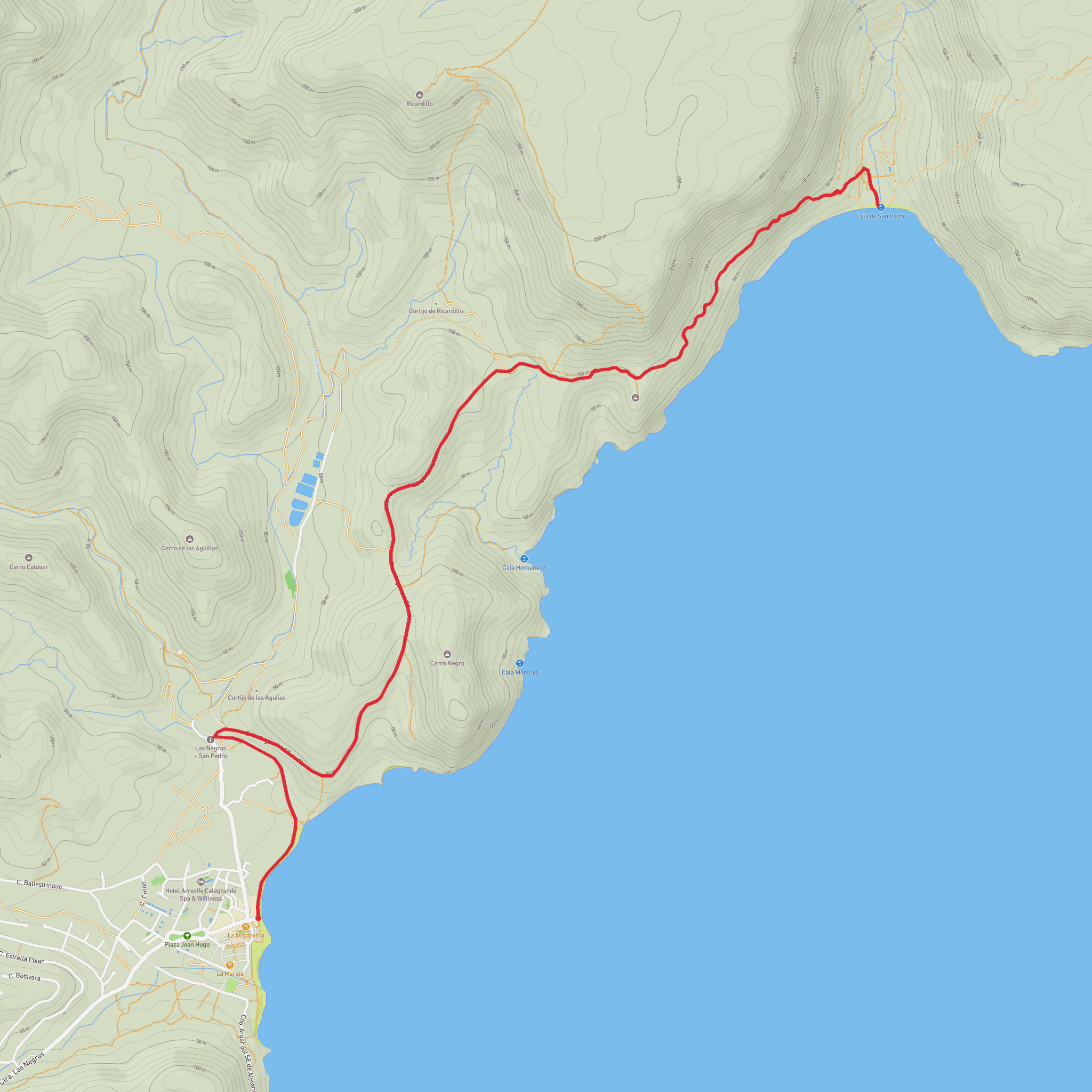
This coastal out-and-back to a secluded cove is a classic “wild beach” walk: a mostly dry, rocky track that rolls over low headlands and shallow gullies before dropping to a sheltered bay with clear water and a small cluster of simple buildings. At around 10 km / 6.2 miles total with roughly 200 m / 656 ft of ascent, it feels “Medium” mainly because of uneven footing, sun exposure, and a couple of short, steeper descents/ascents rather than sustained climbing.
Getting to the start (car + public transport)
Most hikers begin from the Las Negras side, using the signed coastal path toward Cala de San Pedro.
- By car: Drive to Las Negras (Níjar, Almería) and park near the village edge where the coastal track begins. A practical landmark to aim for is the Las Negras waterfront / promenade area (near the beach and restaurants), then follow local signs for the footpath toward Cala de San Pedro. In peak season, arrive early—parking fills quickly and some streets are narrow.
- By public transport: Buses in the Cabo de Gata–Níjar area typically connect Almería with key villages (often via Níjar or San José depending on the line/season). The most workable plan is: Almería → (bus) → San José or Níjar → (connection) → Las Negras, then walk from the village to the trail start. Because schedules can be seasonal and limited, check the current timetable before committing to a same-day return.
If you’re navigating on-trail, load the route in HiiKER before you leave the village—mobile signal can be patchy once you’re away from town and tucked into coves.
What the trail is like underfoot
From Las Negras, the path quickly becomes a stony coastal track with sections of compacted dirt, embedded rock, and loose gravel. You’ll undulate over small rises rather than climb continuously—think short rollers that add up to the ~200 m / 656 ft total gain.
- First third (gentle rollers): You’ll contour above the sea with frequent viewpoints. Expect wind exposure on headlands and little shade.
- Middle section (rockier, more uneven): The tread often narrows and becomes more angular underfoot. Trekking poles can help with balance on loose stones.
- Final approach (drop to the cove): The descent into Cala de San Pedro is usually the most “attention required” part—short, steeper pitches where gravel can slide. Take care if the ground is dusty or if you’re hiking in sandals.
Plan on 3–4 hours of walking time for most groups at a relaxed pace (more if you stop often for photos or a swim), plus breaks.
Landmarks, scenery, and what to look for
This walk sits within/along the edges of Cabo de Gata–Níjar Natural Park, a volcanic coastal landscape known for dark rock, sharp ridgelines, and intensely clear water.
- Coastal viewpoints: Much of the route is a balcony over the Mediterranean. On clear days, you’ll get long views along the serrated coastline and down into small inlets.
- Cala de San Pedro: The cove itself is the main landmark—an isolated bay with a freshwater spring (the “San Pedro” spring) and a small settlement of simple structures. The beach is typically a mix of sand and pebbles; water clarity is often excellent, but conditions depend on wind and swell.
- Old watchtower / defensive heritage: The area’s coastline historically featured watchtowers and coastal defenses built to spot raiders and protect shipping routes. Even when you’re not passing directly by a tower on this exact line, the broader Cabo de Gata coast is shaped by that history—prominent points and elevated lookouts were strategically important for early warning.
Nature and wildlife
You’re walking through a semi-arid Mediterranean ecosystem: hardy shrubs, spiky plants, and drought-adapted species that thrive in sun and wind.
- Plants: Look for esparto grass, rosemary, thyme, and other aromatic scrub. After rains, the landscape can briefly green up, but most of the year it’s dry and open.
- Birdlife: Seabirds and raptors are common—watch for gulls, cormorants, and soaring birds using the coastal thermals. Early morning and late afternoon are best for activity.
- Marine life: In calm water, snorkelers often spot small fish over rocky edges. If you swim, be mindful of urchins on rocks and slippery algae near the waterline.
Key hazards and how to prepare
- Heat + sun exposure: Shade is scarce. Carry at least 1.5–2.5 L of water per person (more in hot months), plus electrolytes. A hat and high-SPF sunscreen matter here.
- Footing: The “Medium” rating is mostly about ankle-turning terrain. Wear shoes with a grippy sole; avoid smooth-soled trainers.
- Wind and swell: Headlands can be gusty; the cove can look calm but still have surge on rocks. If you plan to swim, choose a safe entry/exit and avoid jumping from rocks.
- Timing: Start earlier in warm seasons to avoid the hottest hours. If you’re relying on buses, build in buffer time—services can be infrequent.
- Respect the area: This is a sensitive natural-
Surfaces
Unknown
Dirt
Concrete
Asphalt
Comments and Reviews
User comments, reviews and discussions about the Cala de San Pedro, Spain.
average rating out of 5
0 rating(s)
