Download
3D Flyover
Add to list
More
14.4 km
~3 hrs 55 min
625 m
Point-to-Point
“Climb steadily through whispering hardwoods to Elliot Knob’s storied fire tower, then drift back beside hidden water.”
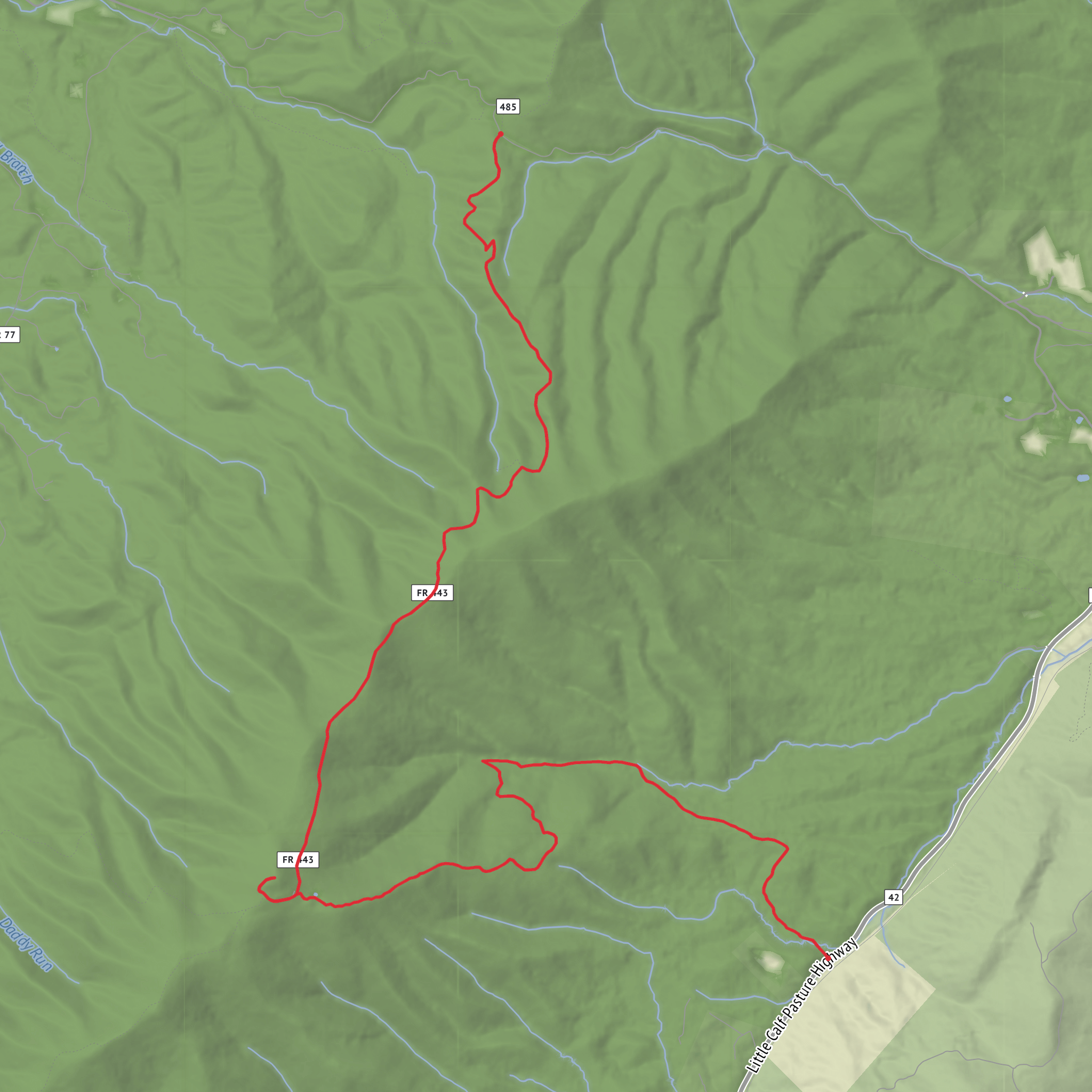
This medium-effort out-and-back to Elliot Knob is a classic Shenandoah Valley summit walk: steady forest climbing, a big payoff at a historic fire tower, and a quieter return that threads through a hollow where you’ll often hear water before you see it. Expect roughly 14 km / 8.7 mi total with about 600 m / 1,970 ft of elevation gain, mostly concentrated in the long climb to the ridge and summit.
Getting to the trailhead (car + public transport options)
By car: The most practical access is from the Augusta Springs / Deerfield area in western Augusta County. A common jumping-off point is the small community around Augusta Springs (near the Augusta Springs Wetlands / Augusta Springs Historic District area), then continuing on local forest roads toward the N Mountain Trail access. Because trailhead pull-offs and forest-road parking can shift with seasonal road conditions and closures, it’s best to confirm the exact start point and parking pin in HiiKER before you go, and download the route for offline use.
By public transport: There isn’t reliable public transit to the immediate trailhead area. The closest realistic approach is: - Amtrak to Staunton, VA (served by the Cardinal on limited days), then - a taxi/rideshare (availability can be limited) or a pre-arranged shuttle to the trailhead area near Augusta Springs/Deerfield. If you’re planning a transit-based trip, build in extra buffer time and have a backup pickup plan—cell service can be inconsistent once you’re on the forest roads.
What the route feels like underfoot
From the start, the hike commits quickly to a sustained, moderate climb through mixed Appalachian forest. The grade is rarely extreme, but it’s persistent—this is the kind of ascent where pacing matters more than power. Underfoot you’ll typically see a mix of leaf litter, embedded rocks, and occasional rooty sections, with a few steeper pitches where the trail tightens into switchbacks or short, direct climbs.
As you gain elevation, the forest composition subtly shifts: lower slopes often feature oak–hickory mixes, while higher, cooler sections can bring more mountain laurel, heath understory, and a slightly more open feel in places. In shoulder seasons, the trail can hold mud in shaded pockets; in winter, expect ice on north-facing sections and near any seepage.
Key landmarks and the summit payoff
The defining landmark is the Elliot Knob fire tower, a prominent structure on one of the higher points in the George Washington National Forest. The summit area is typically breezier and cooler than the trailhead—plan for a noticeable temperature difference, especially in spring and fall.
The tower itself is part of the region’s broader 20th-century fire detection network, when staffed lookouts were a primary defense against wildfires across Appalachian forests. Even when not staffed today, these towers remain important cultural artifacts of forest management history and are a major reason this summit is so popular.
Views can be expansive when conditions are clear, often opening toward the Shenandoah Valley and surrounding ridgelines. Wind exposure at the top can be significant; a light insulating layer is worth carrying even on mild days.
Falls Hollow return: water, shade, and a different mood
The Falls Hollow portion typically feels quieter and more enclosed, trading summit exposure for a hollow’s cooler air and the soundscape of moving water (seasonal). After rain, this section can be slick—watch for wet rock, angled roots, and muddy troughs where water runs down the trail.
If the “falls” are flowing, they’re usually best after recent precipitation or during spring melt. In late summer or drought periods, water features may be reduced to trickles or dry channels, but the hollow still offers a pleasant contrast to the ridge climb.
Wildlife, plants, and what to watch for
This is prime habitat for common Shenandoah/Allegheny foothill wildlife: - White-tailed deer are frequent, especially early/late in the day. - Black bears are present; sightings are possible. Store food securely, keep distance, and make noise in low-visibility sections. - Wild turkeys and a wide range of songbirds are common; raptors may ride thermals near the summit. - Timber rattlesnakes can occur in rocky, sun-warmed areas in warmer months—watch where you place hands/feet, especially near ledges and rock piles.
Seasonal hazards: - Ticks (spring through fall): use repellent, wear long socks, and do a full check after. - Poison ivy is common at lower elevations and along sunny edges. - Hunting seasons (fall/winter): wear bright colors and check local regulations for the specific management area.
Navigation, timing, and effort planning
Even though the route is straightforward, intersections and forest-road approaches can be confusing, and cell service can be unreliable. Use HiiKER for: - confirming the correct trailhead pull-off, - checking junctions between N Mountain Trail and Falls Hollow Trail, - tracking distance/elevation progress offline.
Time estimate: Many hikers will take 4.5–6.5 hours depending on pace, breaks at the tower, and trail conditions.
Practical prep (what most people underestimate)
- Water: Carry at least 1.5–2.5 L per person (more in summer). Don’t assume reliable water at the hollow unless you’ve confirmed recent conditions.
- Footwear: Grippy soles help on slick hollow sections
Surfaces
Unknown
Unpaved
Gravel
Comments and Reviews
User comments, reviews and discussions about the Elliot Knob via N Mountain Trail and Falls Hollow Trail, Virginia.
average rating out of 5
0 rating(s)