Download
3D Flyover
Add to list
More
19.0 km
~5 hrs 18 min
908 m
Out and Back
“Climb from a hush-filled gap to wind-bright ridges, circling Burke’s Garden, then rest at the stone cabin.”
This is a high-country Appalachian Trail outing in Southwest Virginia that climbs from a quiet gap on Garden Mountain up onto open, wind-exposed ridge walking, then finishes at one of the A.T.’s most distinctive shelters: a fully enclosed stone cabin sitting in a grassy clearing. At ~19 km (≈11.8 mi) with ~900 m (≈2,950 ft) of gain, expect a steady, leggy day with a few sharper pitches, long stretches of rocky tread, and big “rim-of-the-bowl” views into Burke’s Garden—often called “God’s Thumbprint” for its near-perfect basin shape. (hikinginthesmokies.wordpress.com)
Getting to the start (car + public transport reality check)
Most common start point: Walker Gap on the Appalachian Trail, on the edge of Garden Mountain Wilderness / Jefferson National Forest. Parking here is typically a small pull-off rather than a large lot, so arrive early and park fully off the road. (appalachiantrail.org)
By car: Navigate toward Burke’s Garden, VA and the Walker Gap road crossing on Garden Mountain (often approached via local routes signed for Burke’s Garden). The Appalachian Trail Conservancy’s “Chestnut Knob” hike description specifically uses Walker Gap parking as the access point. (appalachiantrail.org)
By public transport: There isn’t practical scheduled public transit to Walker Gap/Burke’s Garden. The workable option is to take intercity service to a larger nearby town (commonly Tazewell, VA is referenced as a close town for this hike) and arrange a local shuttle/taxi from there. (appalachiantrail.org)
If you’re using HiiKER for navigation, download the route for offline use before you leave town—cell coverage can be inconsistent once you’re on the ridge.
What the hike feels like, section by section
0.0–~4.5 km (0.0–~2.8 mi): Climb out of Walker Gap into ridge forest
From Walker Gap, the A.T. starts by committing you to the day’s main work: a sustained climb that quickly leaves road noise behind. The tread is typical southern Appalachian singletrack—leafy in places, rocky in others—with short, steeper steps that add up. You’ll be moving through mixed hardwood forest where oak species are especially prominent on the ridges (chestnut oak is common in this region), with a more sheltered, cove-like feel in dips and drainages. (en.wikipedia.org)
What to watch for - Early pacing: The grade encourages going too hard too soon; keep a “conversational” effort until you’re clearly on the ridge. - Footing: Expect rockier patches and occasional slick leaves in shoulder seasons.
~4.5–~9.5 km (~2.8–~5.9 mi): Chestnut Ridge—open walking and Burke’s Garden views
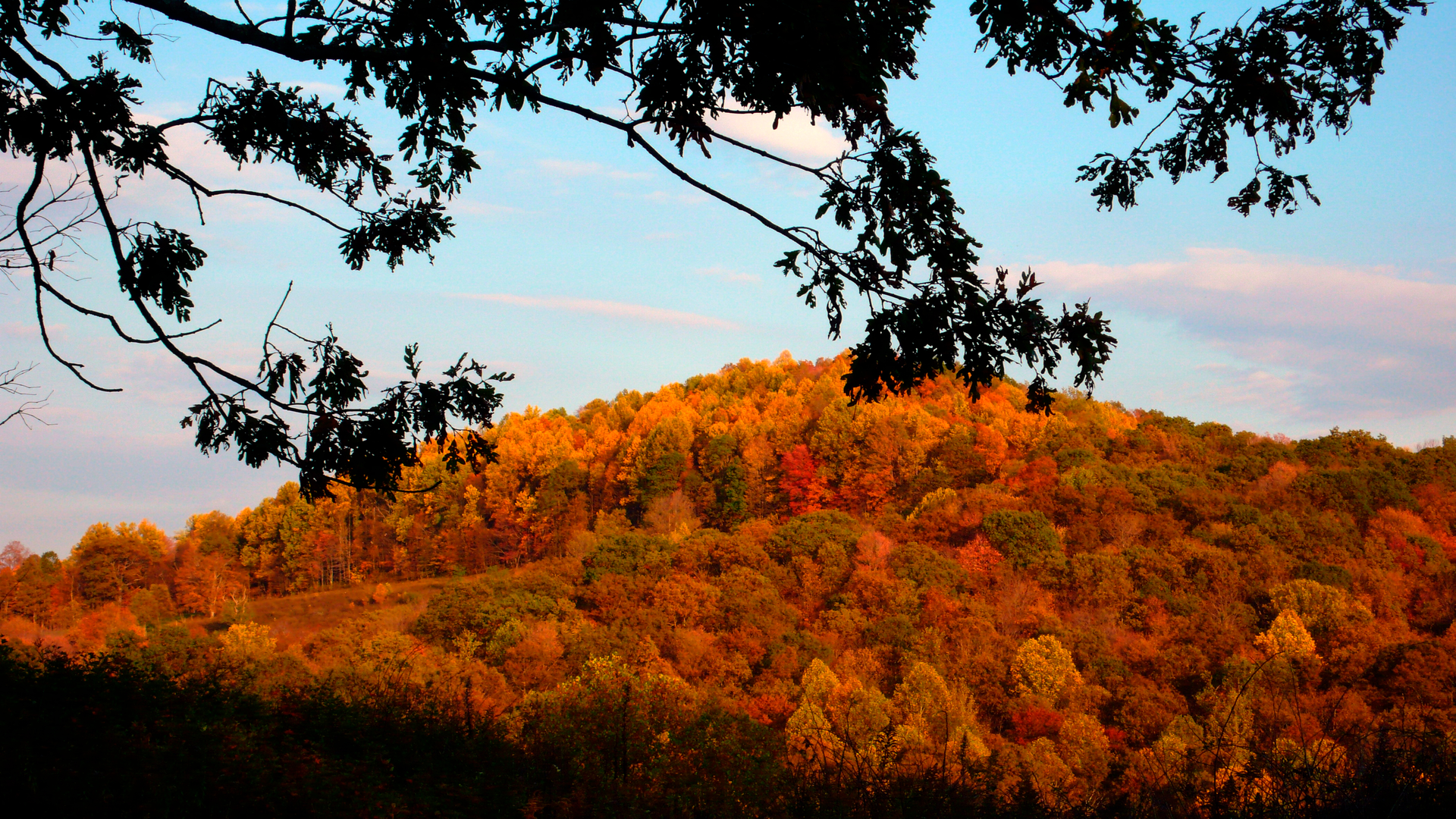
As you gain the crest, the character changes: you begin to pick up more open, grassy ridge sections and wider views. This is where the hike earns its reputation—long looks down into Burke’s Garden, a large, enclosed valley ringed by mountains. (hikinginthesmokies.wordpress.com)
On clear days, the ridge can feel surprisingly “big” for Virginia: wind, sun exposure, and fast-moving weather are common. In fog, the open areas can also make the trail feel less defined—another reason to keep HiiKER handy for quick confirmation at junction-like openings.
Nature notes - The ridge-and-bowl landscape creates varied habitat in a short distance, which is part of why the broader Garden Mountain Cluster is recognized for ecological diversity. (en.wikipedia.org) - Wildlife is typical for Jefferson National Forest ridges: deer are common

Surfaces
Ground
Unknown
Comments and Reviews
User comments, reviews and discussions about the Chestnut Ridge and Chestnut Knob Shelter via Appalachian Trail, Virginia.
average rating out of 5
0 rating(s)