Download
3D Flyover
Add to list
More
4.7 km
~1 hrs 14 min
180 m
Out and Back
“Climb gently through Cumberland Gap’s storied corridor, where cool woods and history converge.”
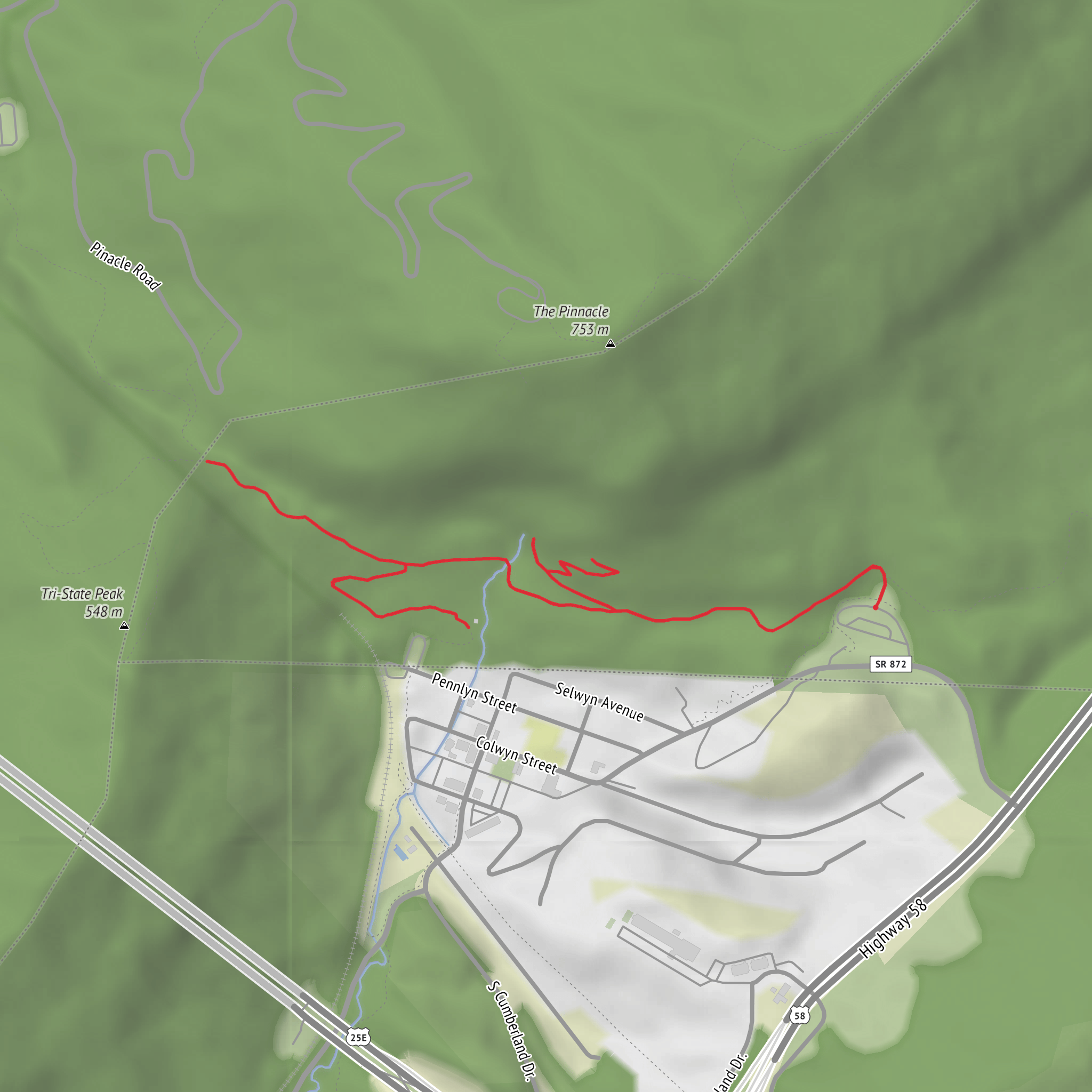
This short, punchy loop/there-and-back style outing packs a lot into ~5 km (about 3.1 miles) with roughly 200 m (about 650 ft) of climbing—enough elevation to feel earned, but still very manageable at a steady pace. You’ll be walking through one of the most historically important natural corridors in the eastern U.S., where a low notch in the mountains funneled wildlife, Indigenous travel routes, and later major waves of westward migration.
Getting to the trailhead (car + public transport)
By car: Aim for the main access point at Cumberland Gap National Historical Park, near the Cumberland Gap Visitor Center (near 91 Bartlett Park Rd, Middlesboro, KY 40965). That visitor center area is the most reliable “known landmark” for parking, restrooms, and current conditions. From there, you can connect to the Wilderness Road Trail system and the signed routes toward Gap Cave and Cumberland Gap.
By public transport: Public transit is limited in this tri-state corner (KY/TN/VA). The most realistic approach is: - Get to Middlesboro, Kentucky (or Harrogate, Tennessee / Lincoln Memorial University area) via regional bus options where available, then use a taxi/rideshare to the Cumberland Gap Visitor Center area. - If you’re coming from farther away without a car, plan on a “last-mile” ride—service can be sparse, so it’s worth arranging a pickup in advance.
Before you go, pull the route up on HiiKER and download it for offline use—cell coverage can be inconsistent in the gap and on wooded slopes.
You’ll want sturdy shoes with good grip (the climb can be slick after rain), a headlamp if you plan to linger near the cave area, and a light layer even in warm months—cool air can pool in shaded hollows.
What the hike feels like underfoot
From the visitor center vicinity, the walking starts gently on well-used park trail, then transitions into a more “mountain corridor” feel: packed dirt, roots, and occasional rocky tread. The overall climb is spread out, but there are a couple of short pitches where you’ll notice the grade. Expect the ascent to build gradually toward the gap, with the steepest effort typically coming as you approach the saddle and viewpoints.
Because the total distance is only ~5 km / 3.1 mi, many hikers move quickly—plan your pace so you can stop for the historic features and overlooks without feeling rushed.
Landmarks, scenery, and the “why this place matters”
Gap Cave area: Gap Cave is one of the signature features here. Access policies can vary (often guided/controlled), so treat the cave entrance area as a major waypoint rather than assuming you’ll be able to go inside at any time. Even from outside, the terrain around the cave hints at the region’s karst geology—limestone and underground drainage that helped form caves and springs.
Cumberland Gap: The gap itself is the star: a natural pass through the Cumberland Mountains that became a critical gateway in American history. Long before European settlement, this corridor was used by Indigenous peoples and wildlife moving through the mountains. In the 1700s, it became closely associated with the Wilderness Road, the route that helped channel migration into Kentucky and beyond. Walking the Wilderness Road Trail here isn’t just a forest hike—it’s a walk through a landscape that shaped travel, settlement patterns, and the broader story of westward expansion.
Views and forest character: As you gain elevation, the forest typically shifts between mixed hardwoods and denser, shaded sections. In spring and early summer, look for wildflowers along trail edges; in autumn, the hardwood canopy can be spectacular. The gap concentrates wind and weather—on breezy days you’ll feel it more strongly near the saddle.
Wildlife and what to watch for
This is classic Appalachian edge habitat—great for birds and small mammals, with larger wildlife present but not always seen. - Black bears are possible in the park region. Make noise on blind corners, keep food secured, and never approach wildlife. - White-tailed deer are common, especially near dawn/dusk. - Snakes (including venomous species in the broader region) may sun on warm days—watch where you place hands/feet on rocks and logs. - Ticks can be a real concern in warm months: use repellent, consider permethrin-treated clothing, and do a full tick check after.
Navigation, timing, and practical planning
Even though the distance is modest, the trail network around the gap can have multiple junctions. Use HiiKER to confirm each turn, especially where side trails branch toward overlooks, historic alignments, or cave-related access points.
A comfortable planning window for most hikers is 1.5–2.5 hours moving time, plus whatever time you want for photos, reading interpretive signs, and pausing at the gap. After rain, budget extra time—mud and slick roots can slow you down more than the elevation gain does.
Key hazards and comfort tips
- Slippery tread: Roots and rock can be slick; trekking poles help on the short steeper bits.
- Weather funneling through the gap: Conditions can change quickly; carry a light rain layer.
- Cave-area etiquette and safety: Stay on designated paths near cave features; edges can be unstable and the ground can be uneven.
- Crowds: This is a marquee park location—midday weekends can be busy. Earlier starts are quieter and better for wildlife sightings.
If you share your starting point details (a town, a parking lot name, or coordinates), I can pin
Surfaces
Dirt
Gravel
Concrete
Comments and Reviews
User comments, reviews and discussions about the Gap Cave and Cumberland Gap via Wilderness Road Trail, Virginia.
average rating out of 5
0 rating(s)
