Charcoal Interpretive Trail and Pig Iron Interpretive Trail Loop
Download
3D Flyover
Add to list
More
1.4 km
~18 min
20 m
Loop
“Wander a gentle heritage loop where charcoal smoke and pig iron echoes linger among regrown woods.”
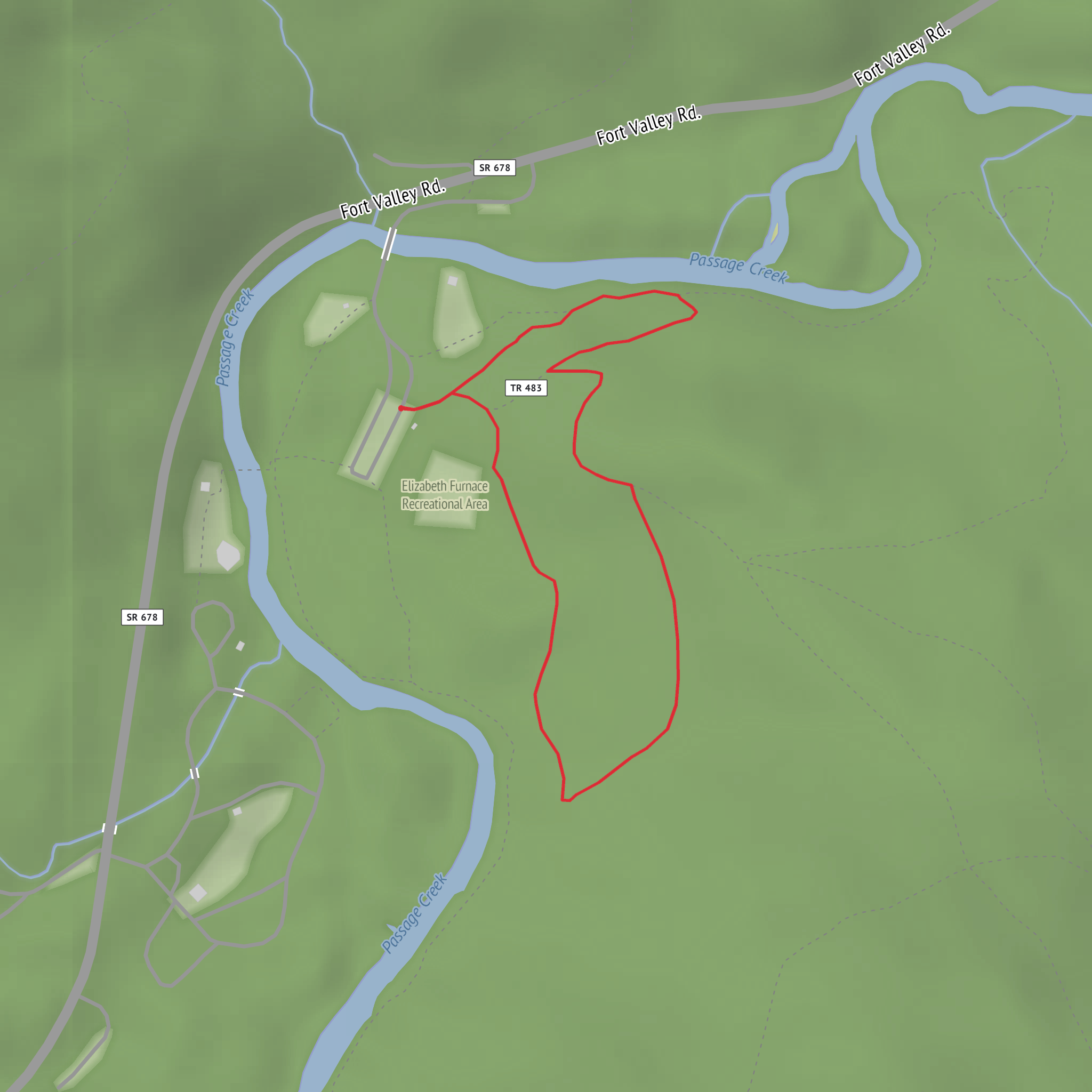
This is a short, mostly level interpretive loop (about 1 km / 0.6 mi with roughly 0 m / 0 ft of climbing) that links two heritage-focused paths—one centered on charcoal production and the other on pig iron—so you can walk through the landscape that once fueled an iron-making operation. Expect a well-signed, stop-and-read style stroll rather than a “destination” hike: you’ll be pausing often at panels, foundations, and reconstructed features.
Getting to the trailhead (car + public transport)
I’m missing the exact start location (“Hike head: near …” is blank), so I can’t reliably convert the lon/lat to the nearest address or landmark yet. If you paste the coordinates (or the park/site name), I’ll pin it to the nearest known address/landmark and tailor directions precisely.
In the meantime, here’s how these interpretive loops are typically accessed: - By car: Look for the site’s main day-use/interpretive parking area (often signed for “Interpretive Trails,” “Furnace,” “Historic Site,” or “Trailhead”). Arrive early on weekends—small lots can fill quickly even for short walks. - By public transport: If the site is near a town, the most realistic approach is usually bus/train to the nearest town center, then a rideshare/taxi to the historic site entrance. Many heritage trailheads are not directly served by transit stops at the gate.
If you tell me the nearest town/park name, I’ll outline the most practical transit routing and where you’d likely need that last-mile ride.
What the walk is like underfoot
Because the loop is only about 1 km / 0.6 mi and essentially flat, it’s well-suited to families, casual walkers, and anyone wanting a low-effort outing with high interpretive value. Surfaces vary by site, but plan for: - Packed gravel or firm dirt with occasional roots - Short boardwalk or hardened sections in wetter spots (common near old industrial waterworks) - A few tight turns and narrow sections around historic remnants
Even with “0 m” listed, you may notice tiny undulations (old berms, shallow drainage dips, or slight grades near former work areas), but nothing sustained.
Route flow and key landmarks (approximate)
Most loops like this break naturally into two halves, with a connector between them:
0.0–0.3 km (0.0–0.2 mi): Charcoal-focused segment You’ll usually start with context panels explaining why charcoal mattered: before coke became widespread, charcoal was the high-heat fuel that made early iron production possible. Look for:
- Flat, circular or oval clearings that may indicate former charcoal hearths/platforms
- Low mounds, shallow pits, or subtle terraces where wood was stacked and burned under controlled conditions
- Interpretive signs describing the labor and timing—charcoal making was slow, smoky, and required careful airflow control
0.3–0.7 km (0.2–0.4 mi): Connector through regrowth forest This middle stretch is often the most “nature-forward.” The forest you’re walking through may be secondary growth—land that was heavily cut to feed furnaces and later regenerated. Watch for:
- Even-aged stands (a clue of past harvesting)
- Edge habitat where birds and small mammals are active
- Seasonal wildflowers in spring and early summer, especially along sunny margins
0.7–1.0 km (0.4–0.6 mi): Pig iron-focused segment “Pig iron” refers to the crude iron produced in a blast furnace and cast into ingots (“pigs”) for transport and later refining. This portion often highlights:
- Remains or outlines of furnace-related infrastructure (foundations, stonework, work yards)
- Discussion of ore, flux (often limestone), and fuel—the three essentials of early ironmaking
- The role of water power (if present): channels, races, or dam remnants that once drove bellows or machinery
If the site includes reconstructed elements (kiln outlines, stacked stone, or replica tools), treat them as interpretive aids—great for understanding scale, but not always original.
Nature and wildlife to look out for
Even on a heritage walk, you’re still in active habitat. What you’ll commonly encounter on short interpretive loops in forested historic sites: - Birdlife: songbirds in the canopy and shrub layer; woodpeckers around dead snags (often left intentionally for habitat) - Mammals: squirrels and chipmunks; deer are common in many regions; dawn/dusk increases chances - Insects: mosquitoes and ticks in warm months, especially near damp low spots or tall grass edges - Plants: regrowth hardwoods and pioneer species; ferns and mosses in shaded, moist pockets; sun-loving plants along wider paths
If you’re hiking in bear country, follow local guidance (noise, food storage, awareness), but I’ll tailor wildlife expectations once I know the exact region.
Historical significance (what you’re actually walking through)
These paired interpretive themes—charcoal and pig iron—usually mark a landscape shaped by early industry: - Charcoal production required vast amounts of wood, which often drove extensive logging and reshaped local forests. - Pig iron production tied together local geology (ore sources), transportation routes, and settlement patterns—workers’ housing, supply roads, and water management
Surfaces
Ground
Unknown
Comments and Reviews
User comments, reviews and discussions about the Charcoal Interpretive Trail and Pig Iron Interpretive Trail Loop, Virginia.
average rating out of 5
0 rating(s)
