Download
3D Flyover
Add to list
More
35.2 km
3 days
1766 m
Multi-Day
“Embark on the High Divide Loop, a scenic but strenuous odyssey through Olympic National Park's rugged beauty.”
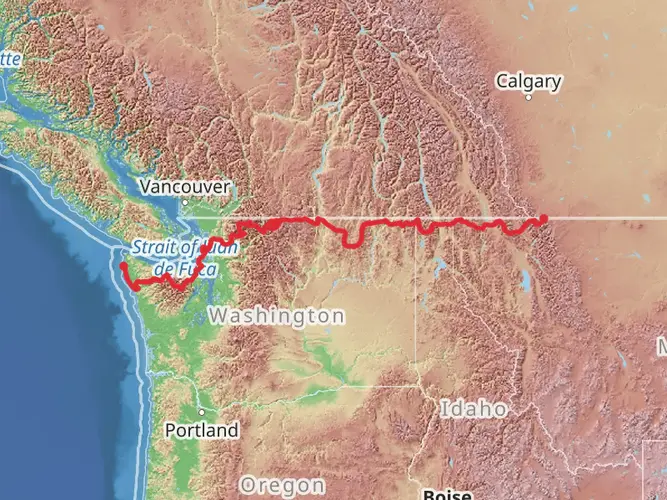
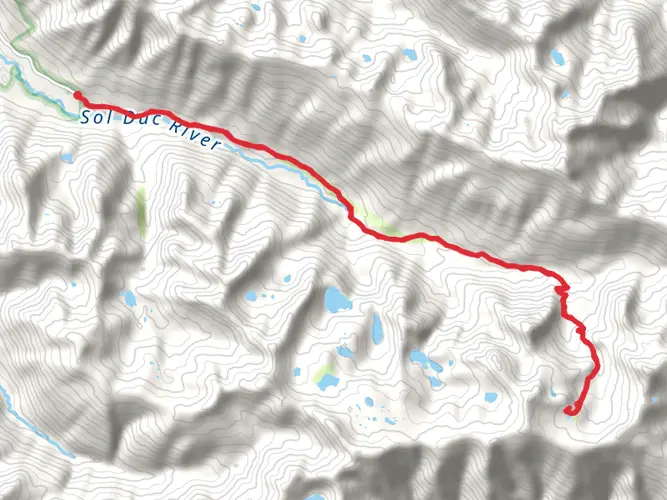
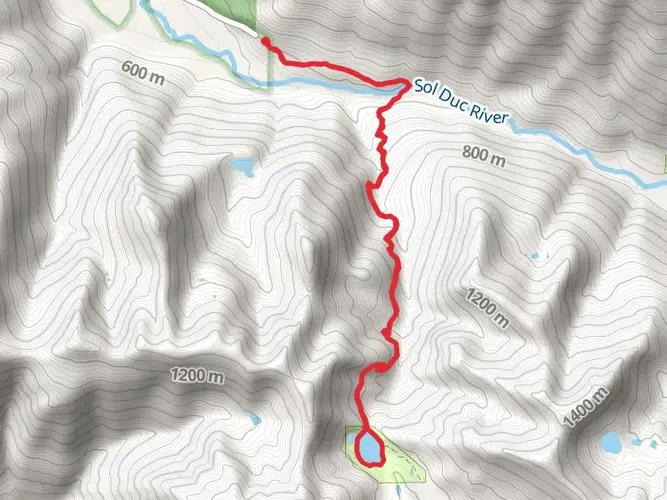
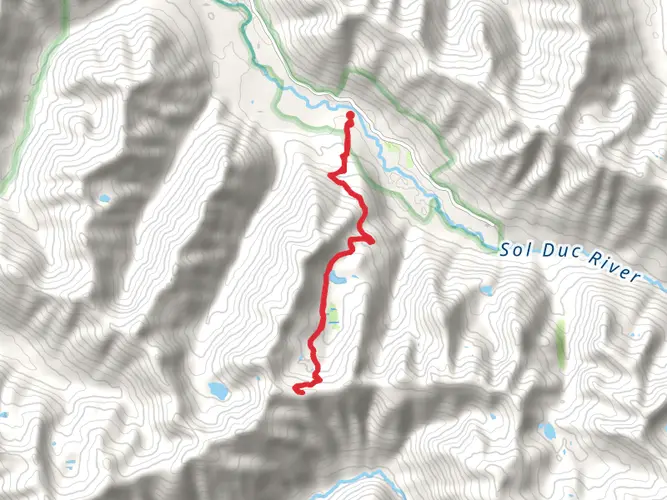
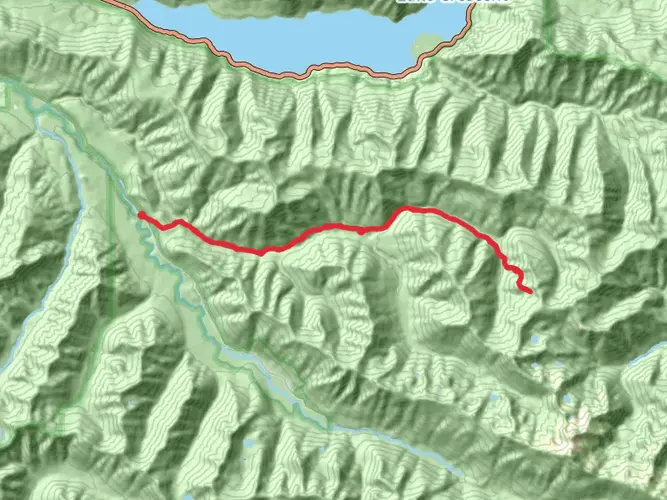
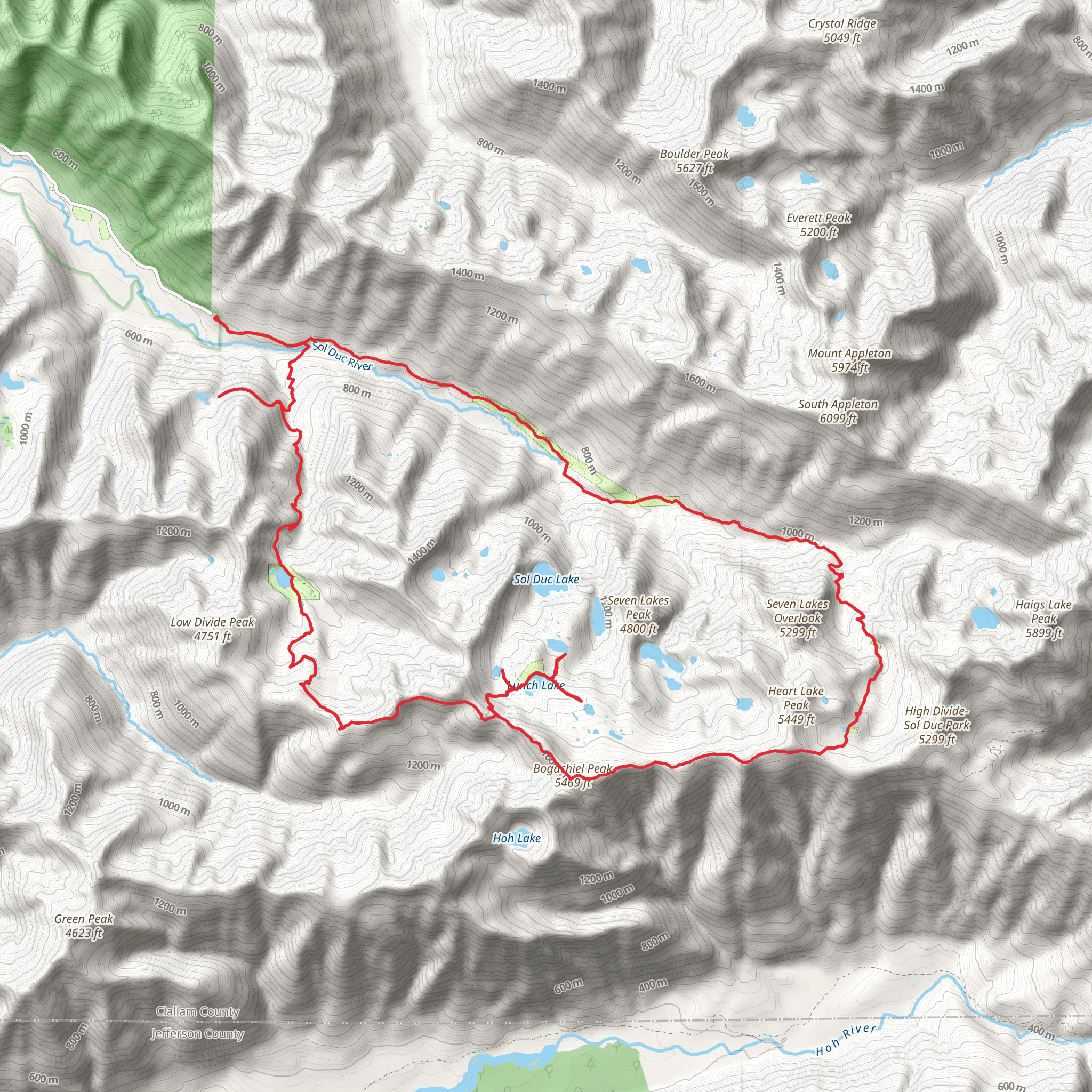
The High Divide Loop, nestled in the heart of the Olympic National Park near Clallam County, Washington, is a challenging yet rewarding trek that spans approximately 35 kilometers (about 22 miles) with an elevation gain of roughly 1700 meters (approximately 5,577 feet). This loop trail is renowned for its stunning vistas, including the 7 Lakes Basin, and is rated as extra difficult due to its steep ascents and rugged terrain.
Getting to the Trailhead To reach the trailhead, hikers can drive to the Sol Duc Valley, which is accessible via Sol Duc Hot Springs Road off Highway 101. The nearest significant landmark is the Sol Duc Hot Springs Resort. For those relying on public transportation, options are limited, but during the summer season, there may be shuttle services available from nearby towns such as Port Angeles.
Navigating the Trail The journey begins at the Sol Duc Trailhead, where hikers will embark on a steady climb through old-growth forests. The ascent is gradual at first but becomes more challenging as you approach the junction with the Deer Lake Trail, about 4.2 kilometers (2.6 miles) in. Deer Lake, sitting at an elevation of 1,067 meters (3,500 feet), is a perfect spot to rest and enjoy the serene alpine environment.
Continuing on, the trail becomes steeper and more strenuous as you approach the High Divide. This section, approximately 11 kilometers (7 miles) from the trailhead, offers panoramic views of the Olympic Mountains and the chance to spot wildlife such as black bears and elk. Hikers should be well-prepared with navigation tools like HiiKER to ensure they stay on the correct path.
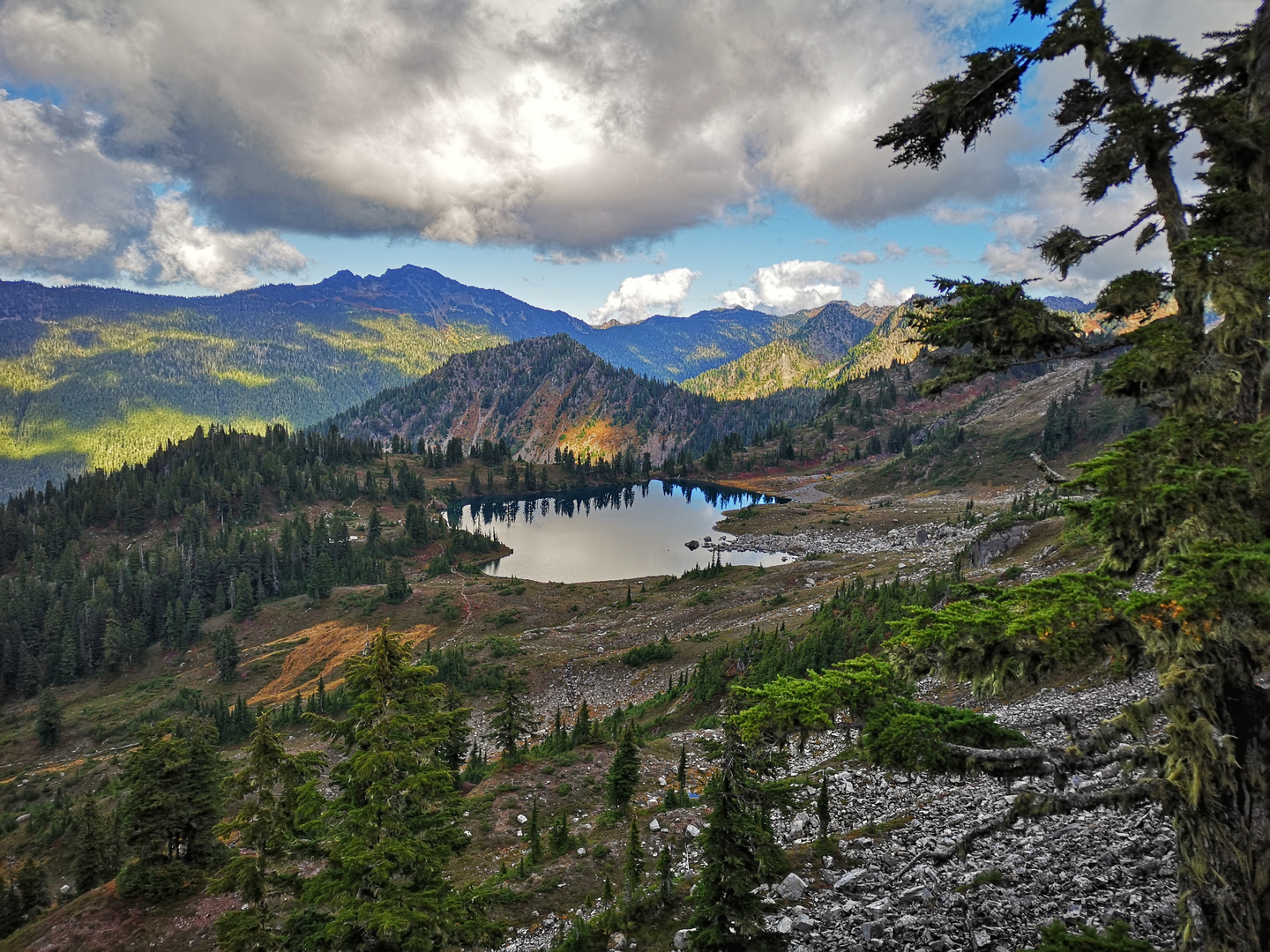
Landmarks and Wildlife As you traverse the High Divide, you'll reach the 7 Lakes Basin, a series of subalpine lakes that are a highlight of the loop. This area is approximately 14 kilometers (8.7 miles) from the trailhead and sits at an elevation of around 1,524 meters (5,000 feet). The basin is not only a visual spectacle but also a habitat for a diverse array of wildlife, including mountain goats and marmots.
Historical Significance The Olympic National Park, established in 1938, is a UNESCO World Heritage Site and an International Biosphere Reserve. The park's history is rich with Native American heritage, and the High Divide Loop traverses areas that were once hunting and fishing grounds for various tribes.
Preparation and Safety Given the trail's difficulty, hikers should be in good physical condition and have experience with backcountry navigation and camping if they plan to complete the loop over several days. Weather conditions can change rapidly, so it's essential to pack appropriate gear for cold and wet weather, even in the summer months.
Environmental Considerations As with any wilderness hike, it's crucial to practice Leave No Trace principles to preserve the beauty and ecological integrity of the area. Hikers should plan to pack out all trash and minimize their impact on the fragile alpine environment.
By preparing adequately and respecting the natural and historical significance of the High Divide Loop, hikers can enjoy a truly memorable experience in one of Washington's most breathtaking landscapes.
What to expect?
Activity types
Frequently asked questions
How long is the High Divide Loop (7 Lakes Basin) and how many days does it take?
The High Divide Loop (7 Lakes Basin) is 35.16 km, or about 21.8 miles, with 1,766 meters of climbing. Most backpackers hike it in 2 to 3 days because the route is a difficult multi-day loop with long ascents, exposed high-country sections, and designated backcountry camps such as Deer Lake, Heart Lake, Lunch Lake, and Sol Duc Park.
Where do you start the High Divide Loop (7 Lakes Basin) and where can you park?
The usual start for the High Divide Loop (7 Lakes Basin) is the Sol Duc Trailhead in Olympic National Park’s Sol Duc Valley, about 15 miles south of Lake Crescent. Access is via Sol Duc Road off US 101, and the main trailhead parking serves routes including Sol Duc Falls, Seven Lakes Basin, and the High Divide area.
Do you need a permit to backpack the High Divide Loop (7 Lakes Basin)?
Yes. Overnight trips on the High Divide Loop (7 Lakes Basin) require an Olympic National Park wilderness camping permit, and camping is limited year-round. This is one of the park’s most popular backpacking loops, so summer permits often book far in advance, especially for camps in the Sol Duc and Seven Lakes Basin zone.
Are dogs allowed on the High Divide Loop (7 Lakes Basin)?
No. Dogs and other pets are not permitted on most trails in Olympic National Park, and there is no dog-friendly backpacking route within the park boundary for the High Divide Loop (7 Lakes Basin). That means the loop is not suitable for hiking with a dog, even as an overnight trip.
When is the best time to hike the High Divide Loop (7 Lakes Basin)?
The best season for the High Divide Loop (7 Lakes Basin) is typically mid-July through September. Snow often lingers on the steep slopes around the High Divide until early or mid-July, and when those sections are still snow covered, an ice axe and self-arrest skills may be necessary near Bogachiel Peak and on the traverse into Seven Lakes Basin.
What are the main highlights on the High Divide Loop (7 Lakes Basin)?
The High Divide Loop (7 Lakes Basin) is known for panoramic views of Mount Olympus, the High Divide ridge, Deer Lake, Heart Lake, Lunch Lake, and the subalpine lakes scattered through Seven Lakes Basin. Wildlife sightings are a major draw too, with elk and black bears commonly seen in the basin meadows during the main hiking season.
Can you camp anywhere on the High Divide Loop (7 Lakes Basin)?
No. Camping on the High Divide Loop (7 Lakes Basin) is allowed only in designated sites. Common overnight stops include Deer Lake, Heart Lake, Lunch Lake, and Sol Duc Park, and there are very few campsites and limited water between Heart Lake and Deer Lake, so itinerary planning matters on this loop.
Do you need a bear canister for the High Divide Loop (7 Lakes Basin)?
Yes. On the High Divide Loop (7 Lakes Basin), all food, garbage, and scented items must be stored in a park-approved bear canister throughout the Sol Duc, High Divide, and Seven Lakes Basin area. That rule applies to camps along the loop and reflects how active bears and other wildlife are in this part of Olympic National Park.
Comments and Reviews
User comments, reviews and discussions about the High Divide Loop (7 Lakes Basin), Washington.
4.67
average rating out of 5
9 rating(s)