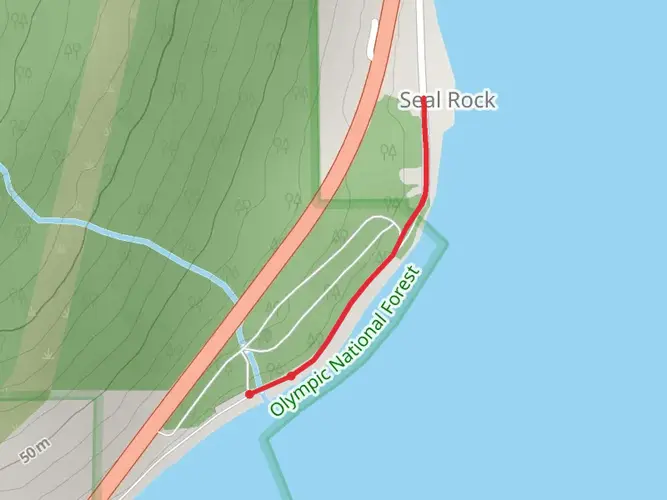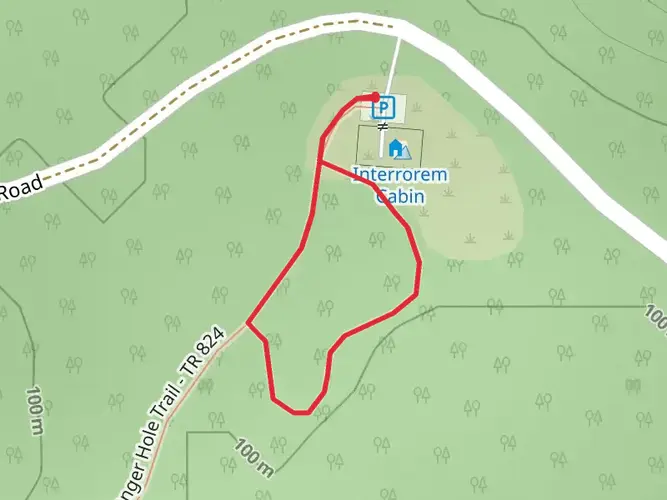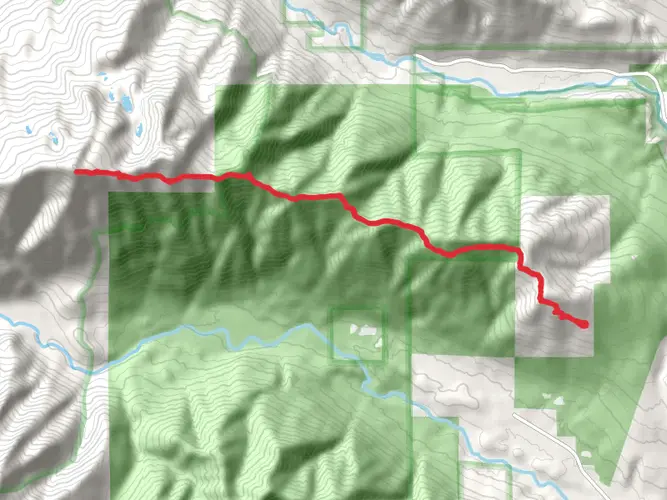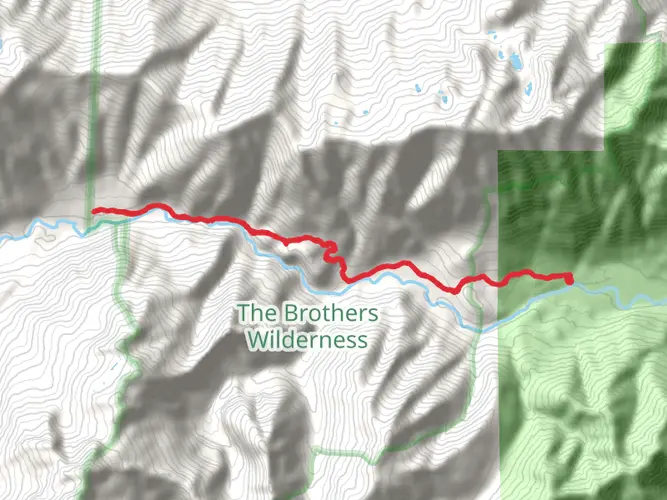
Download
3D Flyover
Add to list
More
70.3 km
5 days
2685 m
Multi-Day
“Traverse the rugged beauty of the Pacific Northwest on the challenging Duckabush to Marmot Lake trail.”
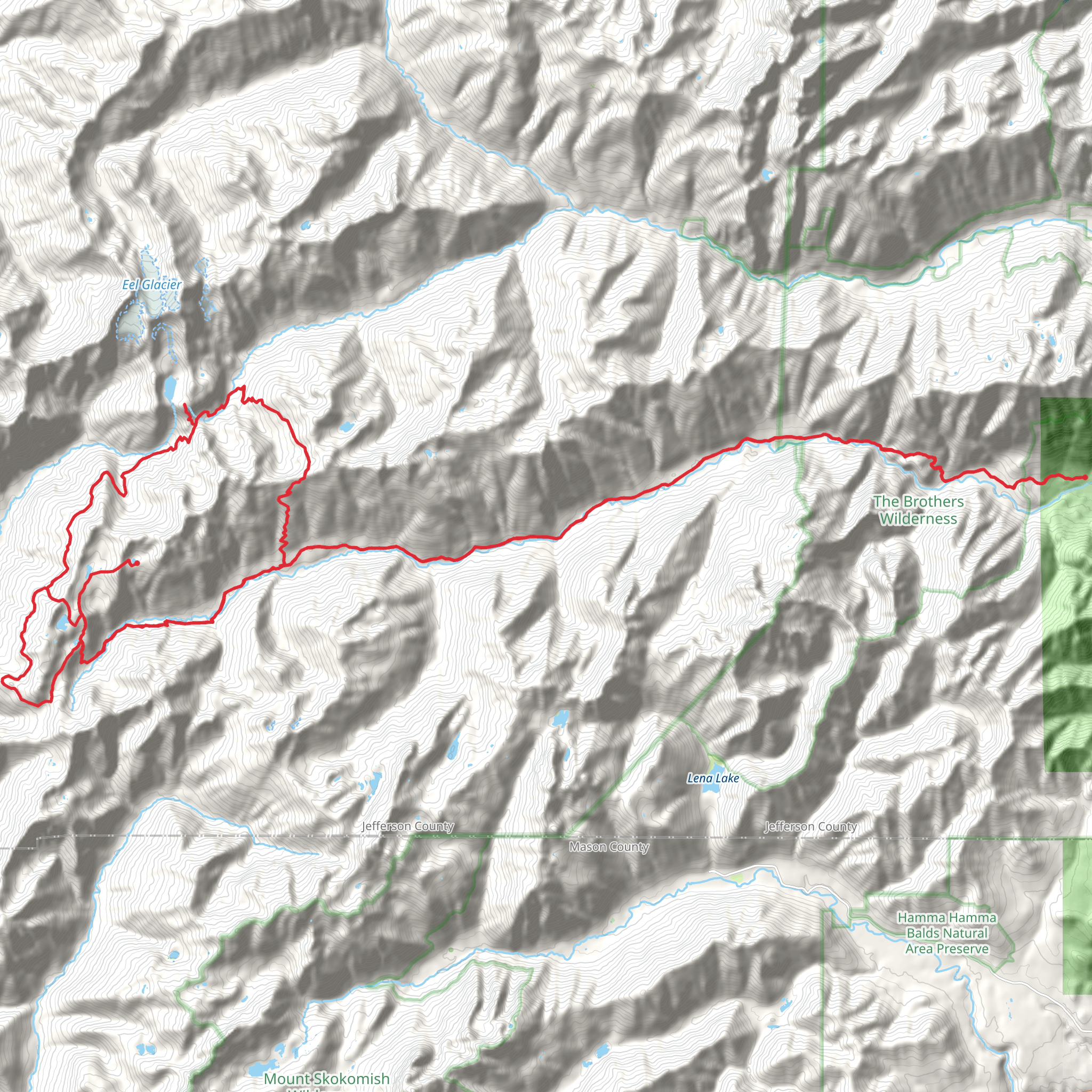
Embarking on the Duckabush to Marmot Lake trail, hikers will traverse approximately 70 kilometers (around 43.5 miles) of diverse and challenging terrain with an elevation gain of roughly 2600 meters (about 8530 feet). This loop trail, nestled near Jefferson County, Washington, is not for the faint of heart, with a difficulty rating that lands squarely in the 'Difficult' category.
Getting to the Trailhead
The journey begins near Jefferson County, where the trailhead is accessible by car. For those opting for public transportation, the nearest significant landmark is the quaint town of Brinnon, Washington. From there, hikers can take a taxi or arrange a shuttle to the trailhead, which is a short drive away.
Navigating the Trail
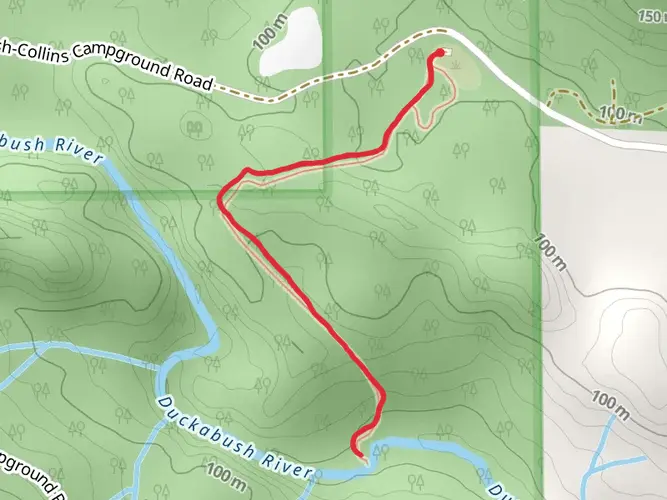
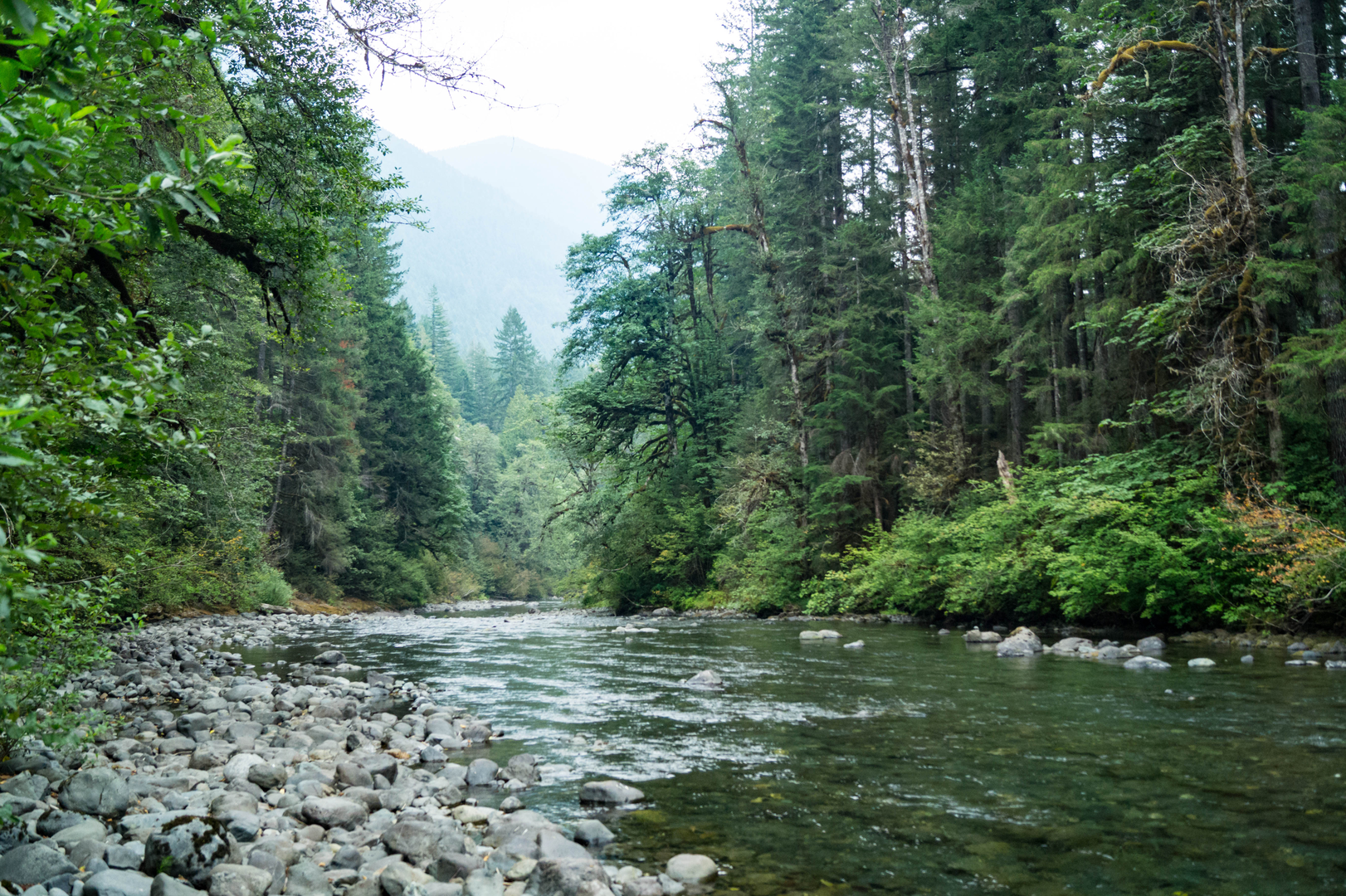
As you set out, the first section of the trail meanders alongside the Duckabush River, offering serene river views and the soothing sounds of flowing water. Hikers should be prepared for a steady climb as the path ascends through old-growth forests, home to towering Douglas firs and western hemlocks. The lush undergrowth and moss-draped trees create a quintessential Pacific Northwest ambiance.
Major Landmarks and Natural Features
Approximately 10 kilometers (6.2 miles) in, you'll encounter Big Hump, a steep climb that rewards hikers with panoramic views of the surrounding Olympic Mountains. As you continue, the trail will lead you to the picturesque Five Mile Camp, a popular resting spot for backpackers.
Further along, at around the 35-kilometer (21.7-mile) mark, you'll reach the heart of the Olympic Wilderness, where Marmot Lake lies nestled. This alpine lake, sitting at an elevation of 1,500 meters (4,921 feet), is a tranquil spot for a well-deserved break, with opportunities to spot the namesake marmots and other wildlife such as black bears and elk.
Historical Significance
The region is steeped in history, with the Olympic Wilderness having been home to Native American tribes long before European settlers arrived. The trail itself is a testament to the ruggedness of the landscape and the perseverance of those who have traversed it over the centuries.
Flora and Fauna
Throughout the hike, the biodiversity is striking. From the dense forests to subalpine meadows, hikers can witness a variety of plant life, including wildflowers that bloom in the late spring and summer. Birdwatchers will delight in the array of species that can be seen and heard, from the haunting call of the varied thrush to the sharp-eyed osprey.
Preparation and Safety
Given the trail's difficulty, it's crucial to be well-prepared. Hikers should have a map and compass, and it's recommended to use the HiiKER app for up-to-date trail information and navigation. Adequate food, water, and clothing are essential, as weather conditions can change rapidly in the mountains. It's also wise to inform someone of your itinerary and expected return time.
Access and Regulations
The trail is managed by the Olympic National Forest, and hikers are required to adhere to Leave No Trace principles to preserve the natural beauty of the area. Permits are required for overnight stays, which can be obtained at the ranger station in Quilcene or at the trailhead.
With its challenging terrain, stunning vistas, and rich history, the Duckabush to Marmot Lake trail offers an unforgettable adventure for experienced hikers seeking to immerse themselves in the wilderness of the Pacific Northwest.
What to expect?
Activity types
Frequently asked questions
How long is The Duckabush To Marmot Lake hike and how hard is it?
The Duckabush To Marmot Lake is a 70.27 km multi-day route with 2,685 m of elevation gain, so it is a serious Olympic backcountry trip rather than a casual overnight. It is rated Extra Difficult, which fits the long mileage, sustained climbing, and remote terrain around the Duckabush River, O'Neil Pass, and Marmot Lake.
Do you need a permit to backpack The Duckabush To Marmot Lake?
Yes. Overnight travel on The Duckabush To Marmot Lake requires an Olympic National Park wilderness camping permit. The Duckabush River corridor includes established backcountry camps such as 10-Mile Camp, Upper Duckabush, and Marmot Lake, and Olympic National Park also requires approved bear canisters in this area.
Are dogs allowed on The Duckabush To Marmot Lake trail?
No. The Duckabush To Marmot Lake route travels through Olympic National Park wilderness, and pets are not permitted on park trails or in undeveloped backcountry areas. That means dogs cannot legally accompany hikers on this route, even if leashed.
Where do you start The Duckabush To Marmot Lake hike?
The Duckabush To Marmot Lake begins from the Duckabush River Trail area near Brinnon in Jefferson County on the east side of Olympic National Park. The main access is by road to the Duckabush trailhead, and Brinnon is the nearest commonly used town for fuel, supplies, and arranging a shuttle or ride.
What are the main camps and landmarks on The Duckabush To Marmot Lake?
Key named points on The Duckabush To Marmot Lake include the Duckabush River corridor, O'Neil Pass, and Marmot Lake. On the Duckabush side, Olympic National Park identifies 10-Mile Camp, Upper Duckabush, and Marmot Lake as established backcountry camping areas, with toilet facilities at each of those camps.
What is the best time of year to hike The Duckabush To Marmot Lake?
The most reliable season for The Duckabush To Marmot Lake is usually summer into early fall. Olympic National Park notes that lower sections of the Duckabush can be snow free year-round, but higher elevations are generally best from early July through October, which matters for travel near O'Neil Pass and Marmot Lake.
Are there any current closures or access issues on The Duckabush To Marmot Lake?
Conditions should be checked right before starting because Olympic National Park can post temporary trail and road closures that affect the Duckabush corridor. Recent park trail-condition updates have included closures tied to fire impacts, including the Duckabush River Trail and O'Neil Pass area, so current status matters for this route more than for a typical frontcountry hike.
Comments and Reviews
User comments, reviews and discussions about the The Duckabush To Marmot Lake, Washington.
4.75
average rating out of 5
8 rating(s)